A breakdown that a ten-minute check would have caught can cost you a day of your trip. Check the car about a week before you leave, pack it the day before, and plan your fuel, charging and rest stops before you start the engine.
This road trip checklist is for drivers in the United States planning two or more days on the road in a gas, hybrid or electric car. It turns the pre-trip advice published by NHTSA, Ready.gov and the Department of Energy into three timed stages, shows where the list changes for an EV, and ends with a short checklist you can print or copy. It is compiled from public sources, not from our own vehicle testing, and it does not replace an inspection by a mechanic.
| Item | Typical value or source | Why it matters |
|---|---|---|
| Tire pressure | The placard on the driver’s door pillar or the owner’s manual (NHTSA) | The number on the tire sidewall is the maximum, not the recommended pressure |
| Tread depth | Replace tires worn down to 2/32 inch; use the penny test (NHTSA) | Worn tread loses grip on wet or icy roads |
| Open recalls | Search your VIN or plate at NHTSA’s recall lookup | Safety recall repairs are free; checking early leaves time for the dealer visit |
| Roadside kit | NHTSA and Ready.gov lists (Stage 2 below) | Lets you call for help, change a tire, make small repairs and wait safely |
| Road conditions | Your state’s official traffic site, listed by FHWA | Closures and weather change the route |
| EV charging | The DOE station locator searches along a route | Charging stops set the day’s pace in an EV |
| Rest breaks | Every two hours or 100 miles (AAA recommendation) | Breaks are planned stops, not emergencies |
How the three-stage checklist works
The Three-Stage Road Trip Checklist sorts every task by when it has to happen: car checks about seven days out, packing the day before, and stop planning for the road itself. The order matters because the first stage leaves the most time to fix what you find; the seven-day timing is our suggestion, not an official rule.
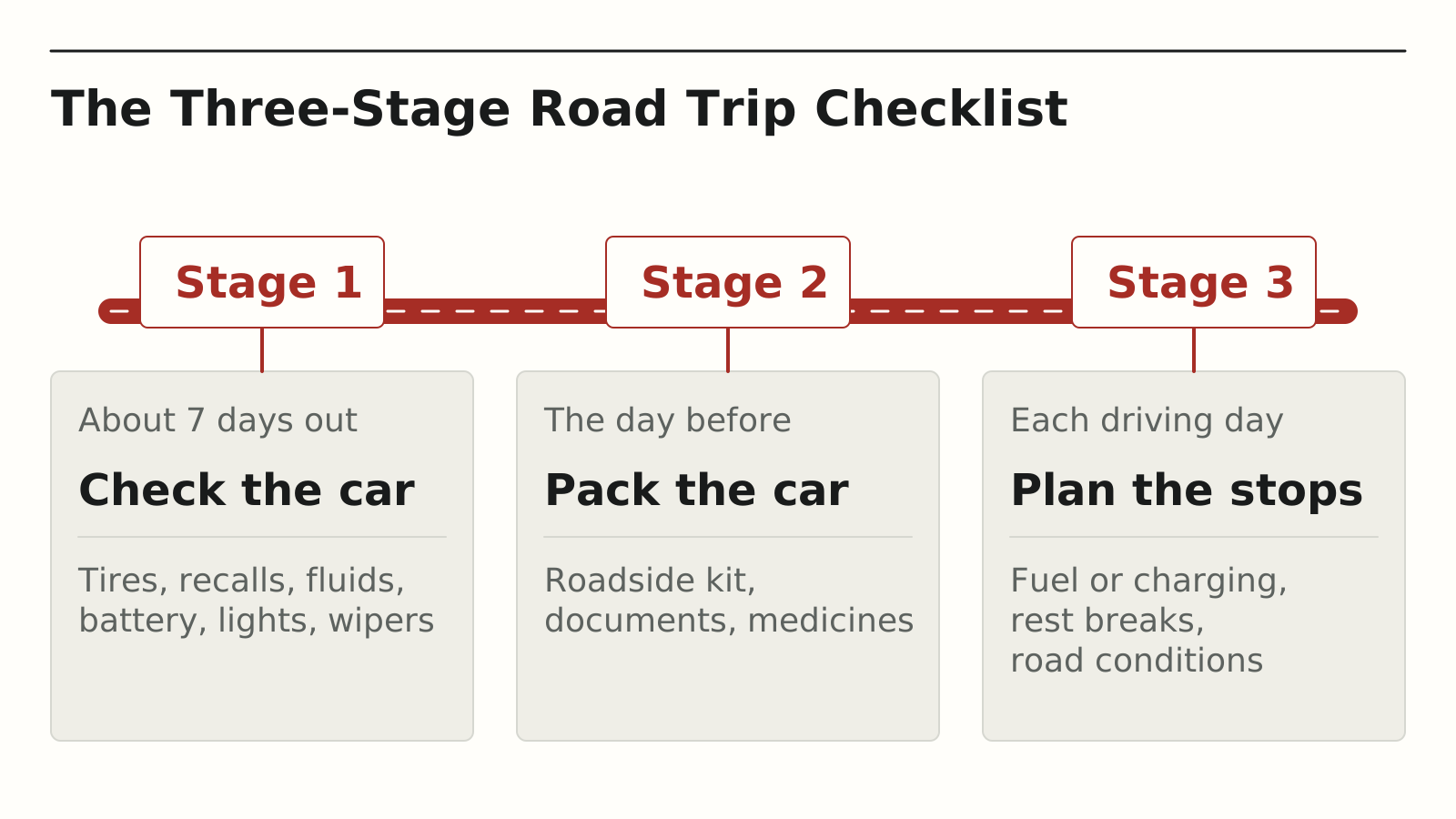
A week’s lead time leaves room to book a service visit, replace a tire or schedule a recall repair, although how long each takes depends on the shop, the parts and the recall remedy. A check done the morning you leave only tells you that something is wrong. Packing the day before keeps the roadside kit from being buried under luggage, and planning stops in advance turns fuel, charging and rest into scheduled events instead of a hunt at low fuel or low charge.
How long each driving day should be is its own decision; our guide to how far you can realistically drive in a day covers drive-time limits and rest breaks. Families with young children should also use the family road trip checklist, which adds car seats and kids’ gear by age.
Takeaway: Start the checklist a week before departure so problems found in Stage 1 can still be fixed.
Stage 1 — Seven days out: check the car
Check tires, recalls, fluids, battery, lights, wipers, hoses and floor mats about a week before you leave. Everything in this table comes from NHTSA’s summer driving and road trip guidance; anything that fails goes to a mechanic or tire professional before the trip, not after it.
| Check | What to look for | Source |
|---|---|---|
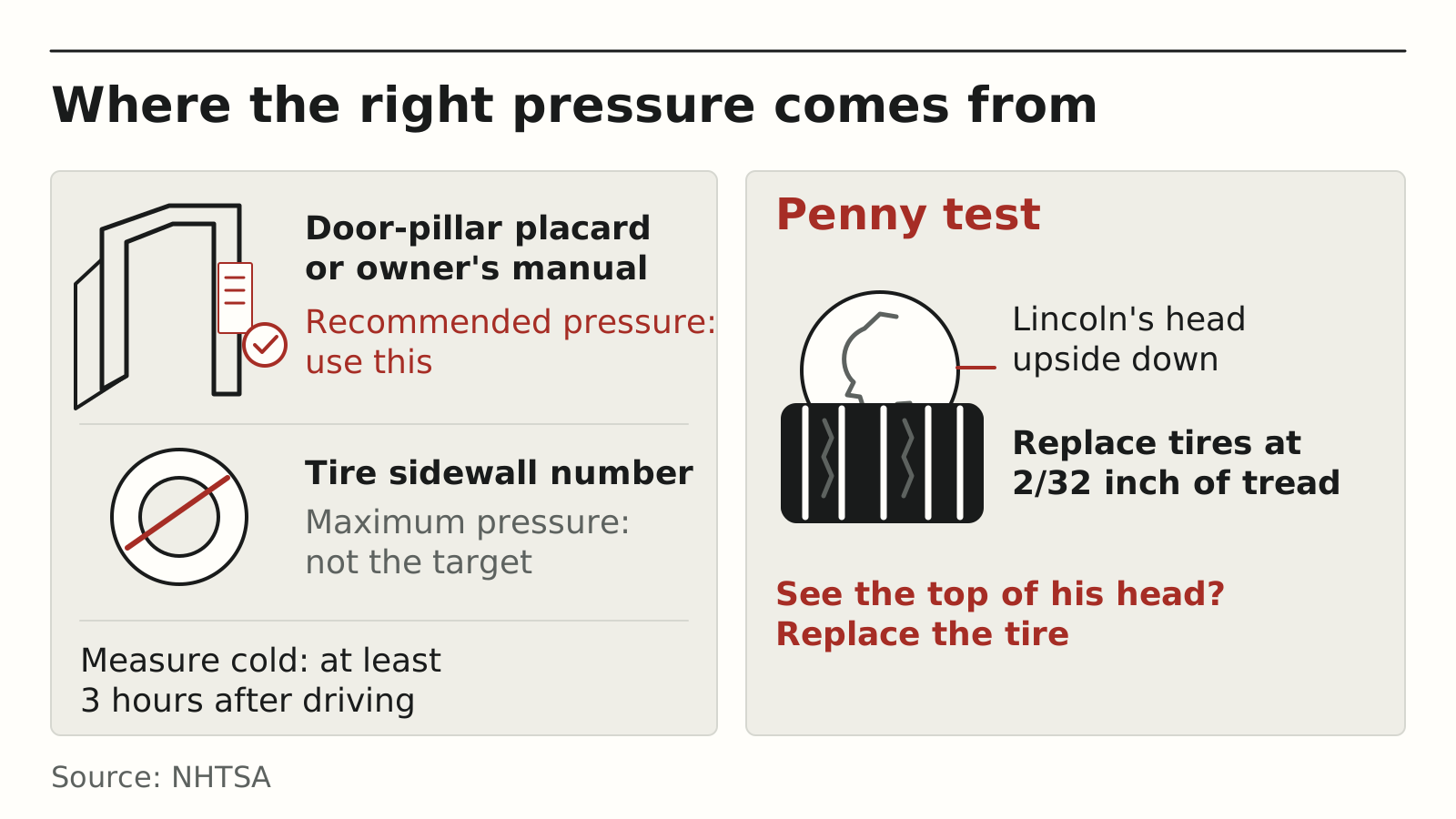
| Tire pressure | Fill each tire, including the spare, to the pressure on the door-pillar placard or in the owner’s manual. Measure “cold”, at least three hours after driving | NHTSA |
| Tread and sidewalls | Replace tires worn down to 2/32 inch; look for cuts, punctures, bulges and cracks; uneven wear means rotation or alignment | NHTSA |
| Tire age | Some vehicle manufacturers recommend replacing tires every six years regardless of use | NHTSA |
| Spare and jack | A usable spare and a jack kit in the car | NHTSA |
| Recalls | Enter your VIN or license plate in NHTSA’s lookup; repairs for safety recalls are free | NHTSA |
| Oil | Check the level; if an oil change is almost due, do it before you travel | NHTSA |
| Coolant | Correct level and type per the owner’s manual; look for leaks | NHTSA |
| Other fluids | Brake, automatic transmission or clutch, power steering (if hydraulic) and windshield washer; keep each reservoir full | NHTSA |
| Battery | Have a mechanic check the battery and charging system | NHTSA |
| Lights | Headlights, brake lights, turn signals, hazard flashers, interior lights, and trailer lights if towing | NHTSA |
| Wipers | Inspect both sides of each blade; replace worn blades before you go | NHTSA |
| Belts and hoses | Bulges, blisters, cracks or cuts; secure connections | NHTSA |
| A/C | Air conditioning performance and cabin air filter | NHTSA |
| Floor mats | Correct size and secured with retention clips so they cannot catch the pedals | NHTSA |
Use the recall check early. NHTSA’s lookup shows unrepaired safety recalls for a specific vehicle when you search by VIN or plate. Your 17-character VIN is on the lower left of the windshield and on your registration card. The lookup does not list every case: recalls more than 15 years old, some very recent recalls and recalls by small manufacturers can be missing, so a “0 unrepaired recalls” result is a good sign, not a guarantee. If a recall notice arrives, NHTSA tells owners to follow the manufacturer’s interim safety guidance and contact a dealer for the free repair.
If you find tire damage, take the car to a tire professional. If you see signs of a fluid leak, NHTSA’s advice is to have the vehicle serviced before the trip.
Common mistake: Inflating tires to the number printed on the sidewall. NHTSA notes that figure is the maximum pressure the tire can hold, not the pressure your vehicle needs; use the door placard instead.
Takeaway: Book any repair, recall fix or new tire as soon as Stage 1 finds a problem, while there is still a week left.
Stage 2 — The day before: pack the car
Pack a roadside kit first, then documents and medicines, then everything else. NHTSA and Ready.gov publish overlapping emergency kit lists; the table merges them so you can tick each item once.
| Kit item | Listed by | Note |
|---|---|---|
| Cell phone and charger (car charger) | NHTSA, Ready.gov | NHTSA puts the phone at the top of the list |
| First aid kit, including a tourniquet | NHTSA | |
| Flashlight | NHTSA | |
| Flares and a white flag, or a reflective triangle | NHTSA, Ready.gov | |
| Tire pressure gauge | NHTSA | |
| Jack and a ground mat | NHTSA | |
| Jumper cables | NHTSA, Ready.gov | |
| Work gloves and a change of clothes | NHTSA | |
| Basic repair tools and duct tape | NHTSA | Duct tape for a temporary hose patch |
| Water and paper towels | NHTSA | For cleaning up |
| Nonperishable food, drinking water and medicines | NHTSA | |
| Extra windshield washer fluid | NHTSA | |
| Emergency blankets, towels and coats | NHTSA, Ready.gov | |
| Ice scraper | Ready.gov | Cold-weather routes |
| Paper maps | NHTSA, Ready.gov | Useful where phone signal drops |
| Cat litter or sand | Ready.gov | For traction on snow or ice |
Then pack what the lists assume you already have: your driver’s license, vehicle registration and proof of insurance, prescriptions in their labeled containers, and payment cards or apps for fuel and charging. Keep the kit and medicines where you can reach them without unloading the trunk.
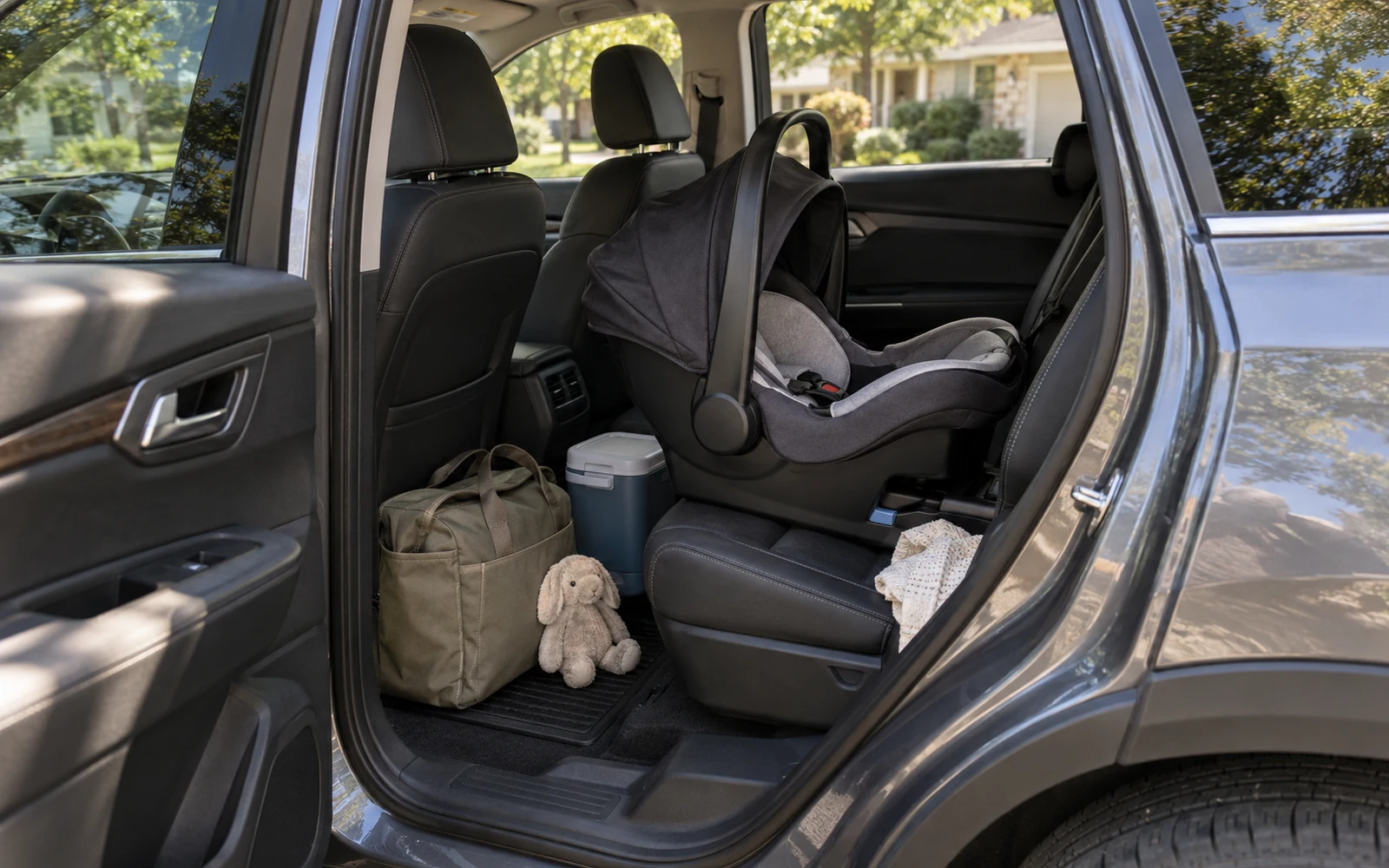
Travelling with children adds its own checks. The family checklist’s car seat step covers seats by age, and NHTSA’s rule for every trip is that children under 13 ride buckled in the back seat. Never leave a child alone in the car, even briefly: NHTSA notes that a child’s body temperature rises three to five times faster than an adult’s. With a baby or toddler aboard, plan stops for the youngest passenger and the driver rather than the driver.
Takeaway: Pack the roadside kit before the luggage so it stays within reach.
Stage 3 — On the road: fuel, charge and rest stops
Plan where you will refuel or recharge and where you will rest before you leave, and check weather and road conditions on the morning of each driving day. NHTSA’s advice for longer trips is to keep the tank close to full and to allow time to stop, stretch, eat and change drivers.
Fuel. In a gas car, refill well before the gauge runs low, especially on rural stretches where stations are far apart. NHTSA advises keeping the tank close to full whenever possible.
Charging. In an EV, charging stops set the shape of the day. The Department of Energy’s Alternative Fueling Station Locator searches for public charging stations by location or along a route in the United States and Canada, and its filters cover connector type and network. How long each stop takes depends on the battery’s state of charge, its size, the car’s charging capability and the charger’s power. Our EV road trip planning guide explains how to vet each charging stop and what to do when a station is out of service.
Rest. AAA recommends scheduling a break every two hours or every 100 miles on longer trips, travelling at times when you are normally awake, and sharing the driving with an alert passenger. Our long-drive guide lists the fatigue warning signs that mean you should stop whatever the schedule says.
Road conditions. The Federal Highway Administration keeps a state-by-state list of official traffic and road-closure sites. Check the states on your route, review directions before you go even if you use GPS, and tell someone your route and expected arrival time, as NHTSA suggests.
Common mistake: Planning fuel or charging stops on a full-tank or full-battery range figure. Wind, hills, weather, heater or A/C use and a loaded car all change how much fuel or charge each mile takes; plan the next stop well before the gauge reaches the bottom.
Takeaway: Put fuel or charging stops and rest breaks on the route plan before you leave, not when the gauge or your attention runs low.
Gas, hybrid or EV: what changes on the checklist
Most of the checklist is the same for every powertrain: tires, recalls, lights, wipers, the roadside kit and rest breaks apply to all of them. The differences sit in fluids, tires, energy planning and cold weather. If this is your first long EV trip, start by choosing a planner type before you map stops.
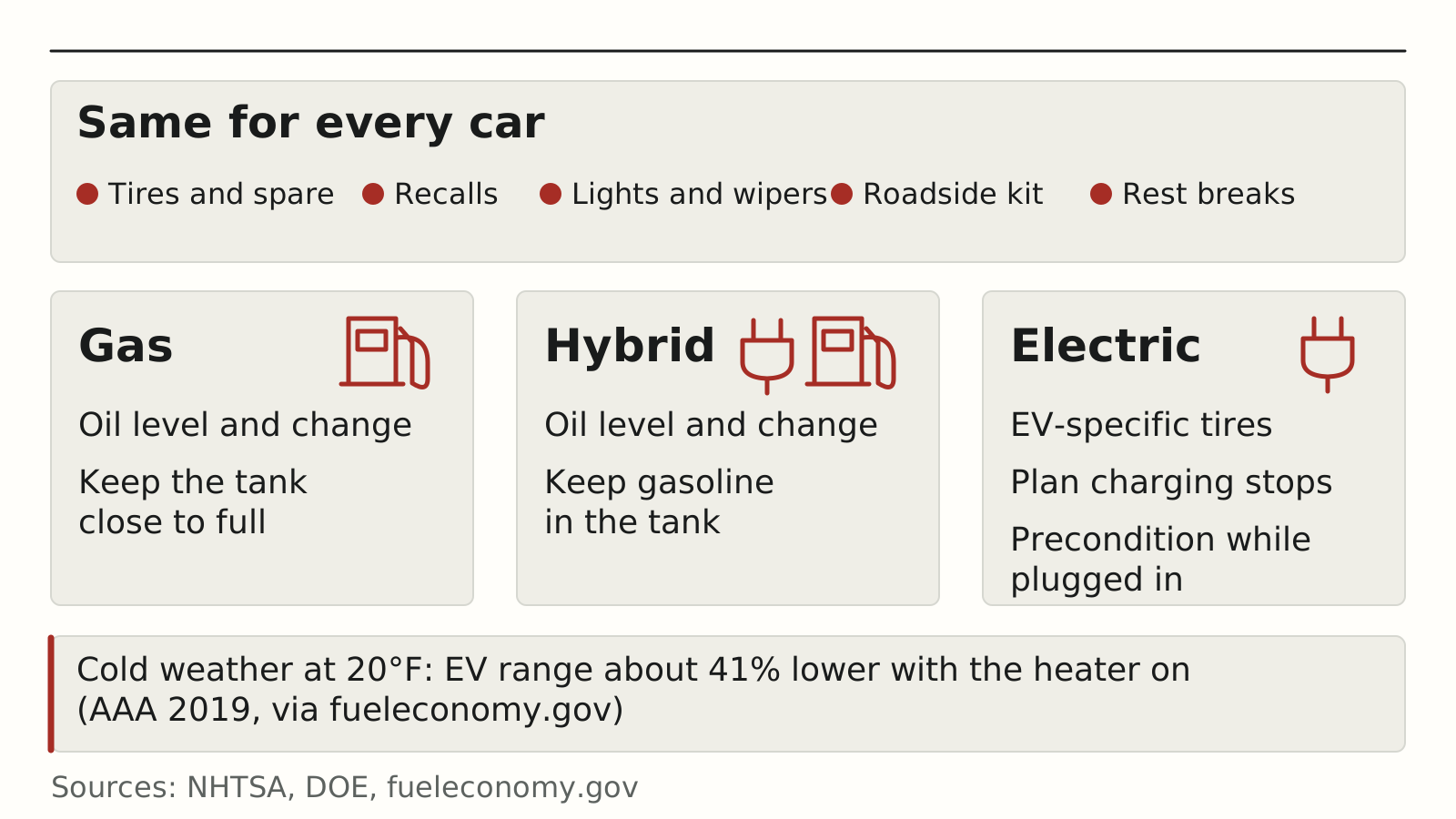
| Checklist item | Gas car | Hybrid | Electric car |
|---|---|---|---|
| Engine oil | Check level; change first if due (NHTSA) | Same as gas (NHTSA) | Not applicable; check the fluids your manual lists (NHTSA) |
| 12-volt battery and charging system | Mechanic check (NHTSA) | Mechanic check; keep gasoline in the tank to support the engine (NHTSA) | Mechanic check (NHTSA) |
| Tires | Standard pressure, tread and damage checks | Same | Same checks; EVs are often heavier and use EV-specific tires (NHTSA) |
| Energy stops | Keep the tank close to full (NHTSA) | Plan fuel stops like a gas car | Plan charging stops with a route planner or the DOE locator |
| Cold weather | Lower fuel economy in the cold | Larger drop than gas cars (fueleconomy.gov) | At 20°F, range fell about 41% with the heater in use in AAA’s 2019 testing cited by fueleconomy.gov |
| Cold-weather fix | Park somewhere warmer; check tire pressure | Same | Precondition the cabin while plugged in; use seat heaters instead of cabin heat (fueleconomy.gov) |
The cold-weather row matters most for EV owners on winter trips. fueleconomy.gov reports that when the cabin heater is not used, EV range was about 12% lower at 20°F than at 75°F, so most of the winter loss comes from heating the cabin. NHTSA’s winter guidance adds that plugging an EV in overnight in freezing weather keeps the battery warmer. Use these figures as a reason to plan closer charging stops in winter, not as a prediction for your car. The Mobility section collects our other EV and charging articles.
Takeaway: Run the same core checks on every car, then add the fluid, tire and energy rows for your powertrain.
Go, fix first, or postpone?
Go when every Stage 1 check passes, fix first when a check finds wear, damage, a leak or a service that is due, and postpone when a needed repair cannot be finished before departure. The table pairs each finding with what the source says and our suggested next step.
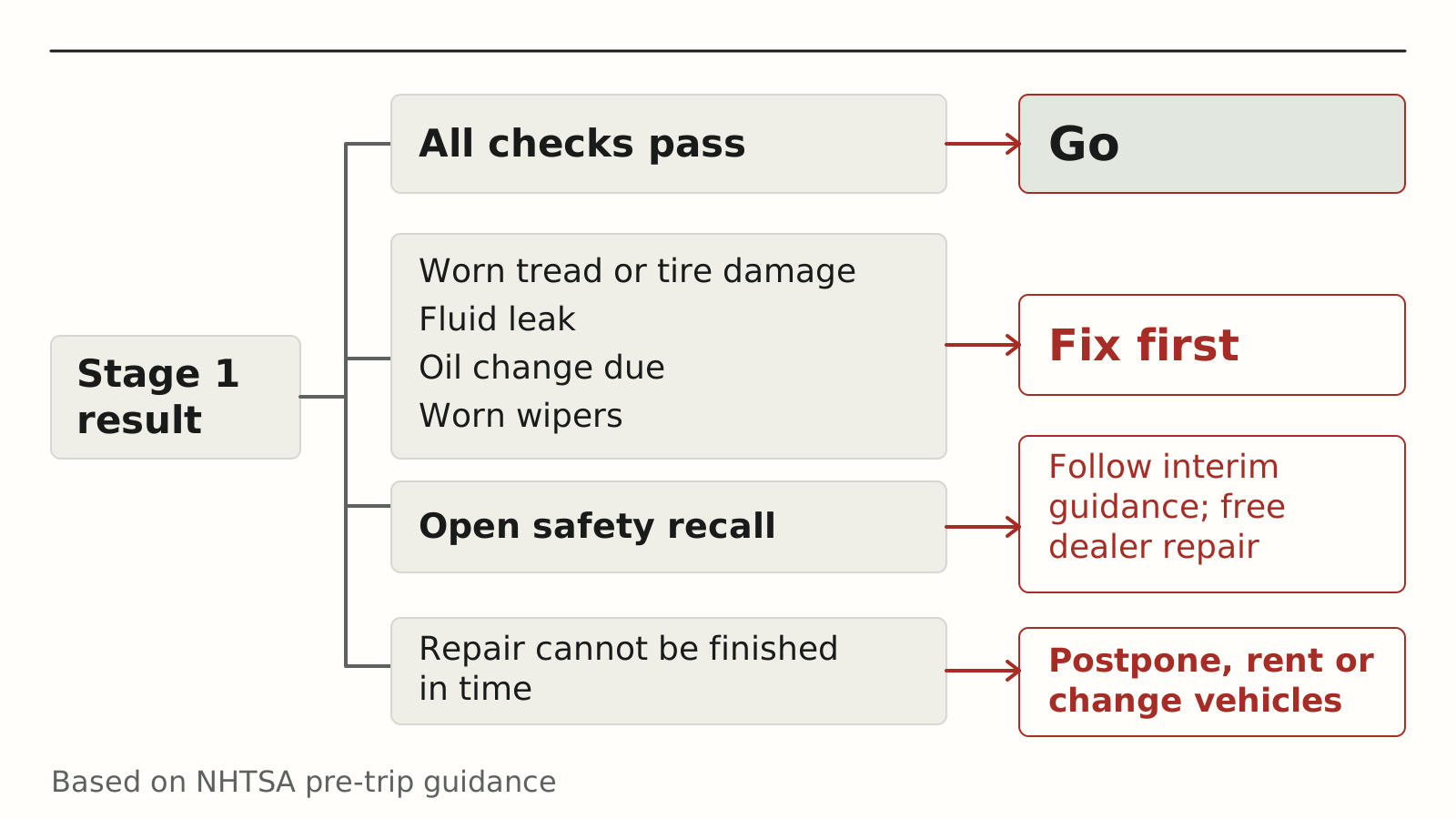
| Finding | What the source says (NHTSA) | Our suggested next step |
|---|---|---|
| All checks pass | Even a well-maintained vehicle can break down, so carry a roadside kit | Go, with the kit packed |
| Tread worn down to 2/32 inch, uneven wear or sidewall damage | Replace worn tires; take damage to a tire professional | Fix first |
| Fluid leak | Have the vehicle serviced | Fix first |
| Oil change almost due | Do it before you travel | Fix first |
| Worn wiper blades | Buy new ones before you go | Fix first (a quick job) |
| Open safety recall | Follow the manufacturer’s interim safety guidance; the dealer repair is free | Fix first; if the remedy is not ready before departure, ask the dealer what the interim guidance allows |
| A repair cannot be finished before departure | No single rule | Postpone, rent, or change vehicles |
Treat the last two rows as a judgment call for you and your mechanic. This site does not give mechanical, insurance or legal advice, and a checklist cannot see what a technician on a lift can.
Takeaway: Decide go, fix or postpone on the day Stage 1 ends, not the night before departure.
When this checklist does not apply
This checklist is written for a private car or crossover on paved roads in the United States. Adjust it, or use a specialist list, in these cases:
- Towing a trailer or driving an RV. Hitch, trailer brakes, trailer tires and lights add checks this list does not cover beyond NHTSA’s reminder to test trailer lights.
- Winter mountain routes. Some states and passes require chains or traction tires; check the official traffic site for each state on the route.
- Driving outside the U.S. Recall lookups, roadside services and charging networks differ by country.
- Commercial or work driving. Federal hours-of-service and inspection rules for commercial drivers are separate from this list; our long-drive guide explains how those limits compare with a vacation driving day.
- A known fault. If a warning light is on or something already feels wrong, have it diagnosed before using any checklist.
Takeaway: If your trip falls into one of these cases, add the specialist checks before you rely on this list.
The printable checklist
Copy this list into your phone’s notes or print the page and tick items off. It summarizes the three stages; tick the individual kit items in the Stage 2 table.
Stage 1 — About seven days out
- Tire pressure set cold to the door placard, spare included
- Tread above 2/32 inch (penny test); no cuts, bulges or cracks
- Tire age checked against your vehicle maker’s advice
- Spare tire and jack kit in the car
- Recall lookup by VIN or plate; any open recall repaired, or the maker’s interim guidance followed
- Gas or hybrid: oil level checked; oil change done if due
- Coolant, brake, washer and other fluids your manual lists; no leaks
- Battery and charging system checked by a mechanic
- All lights working (trailer lights too, if towing)
- Wiper blades and washer fluid
- Belts, hoses, A/C and cabin filter
- Floor mats correct and clipped
Stage 2 — The day before
- Roadside kit packed and reachable (Stage 2 table)
- License, registration, insurance card
- Medicines and prescriptions
- Payment for fuel or charging set up
- Child seats installed (see the family checklist)
Stage 3 — Each driving day
- Weather, road conditions and closures checked
- Fuel or charging stops on the route plan
- Rest breaks about every two hours or 100 miles
- Route and arrival time shared with someone
Takeaway: Complete Stage 1 first and fix what it finds before moving on to packing.
Related reading
Pick the next guide by what your trip needs: long driving days, children aboard, or an electric car.
- Long drive tips and daily driving limits — Decide how many hours to drive each day and when to swap drivers.
- Family road trip checklist — Add car seats, stop timing and kids’ packing by age.
- How to plan an EV road trip — Choose a planner and line up charging stops with a backup.
- More road trip guides — Browse every road trip article on the site.
Methods and sources
This checklist was compiled on October 7, 2026 from public guidance by the National Highway Traffic Safety Administration, Ready.gov, the Department of Energy’s Alternative Fuels Data Center, the Federal Highway Administration, fueleconomy.gov and AAA. NHTSA and FHWA pages were read from archived copies dated August 11–October 4, 2026 because the live sites blocked our automated reader. We did not test vehicles. Cold-weather EV figures come from AAA’s 2019 range testing as reported by fueleconomy.gov and describe a 20°F test, not your car. The full source list appears below.