Short sleep before a long drive costs more than time: in a 2016 AAA Foundation study, drivers who had slept four to five hours in the previous 24 hours had 4.3 times the crash rate of drivers who slept seven hours or more. How far you can drive in a day depends less on the map than on how rested you are; our suggestion is to plan six to eight hours of driving for a rested solo driver, stop about every two hours, and split anything beyond eleven hours over two days.
For a private driver in the United States, the federal hours-of-service limits do not apply; they are written for commercial drivers. The practical limit is fatigue. AAA recommends a break every two hours or 100 miles, NHTSA warns that drowsy crashes peak between midnight and 6 a.m. and in the late afternoon, and the AAA Foundation found crash rates rising sharply below seven hours of sleep. The planning table below turns that into daily drive-time bands; it is our planning guide built on those sources, not an official standard.
Key points:
- Sleep sets the limit: crash rates climbed as sleep in the previous 24 hours fell below seven hours (AAA Foundation, 2016).
- Stop about every two hours or 100 miles, as AAA recommends.
- Avoid driving between midnight and 6 a.m. and through the late-afternoon dip when you can.
- Treat yawning, drifting, missed exits or rumble strips as a reason to stop now, not at the next planned break.
How long can you drive in a day?
Our suggestion is to plan most days at six to eight hours of driving for a rested driver with regular breaks, add a second driver beyond that, and split the day beyond eleven hours; end any day early if fatigue signs appear. Federal limits exist only for commercial drivers, but they are a useful reference point for what regulators treat as a long day.
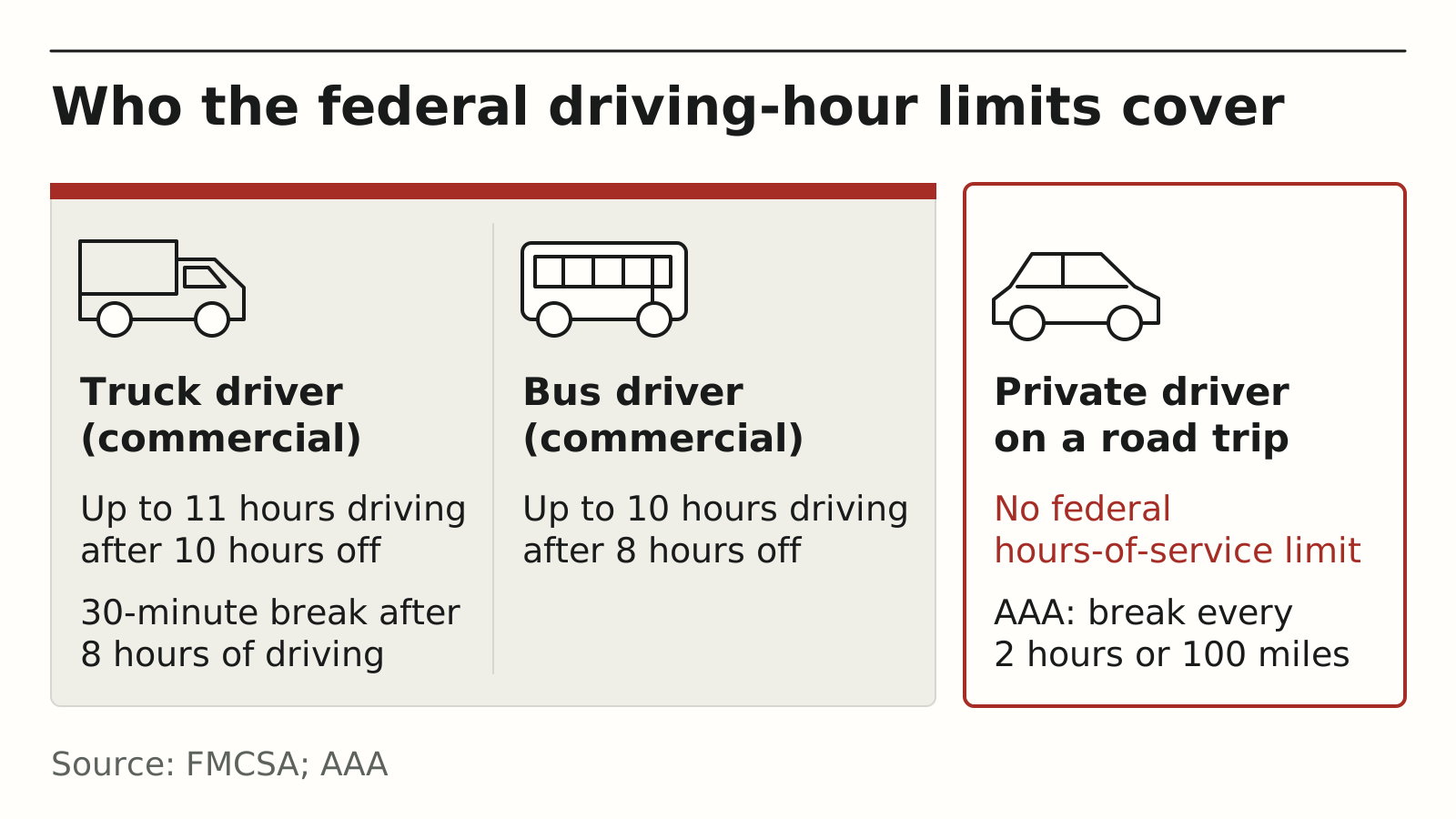
| Driver | Daily driving limit | Break rule | Source |
|---|---|---|---|
| Property-carrying commercial driver (for example, a truck driver) | Up to 11 hours of driving after 10 consecutive hours off duty; no driving beyond the 14th consecutive hour after coming on duty | A 30-minute break after 8 cumulative hours of driving without a 30-minute interruption | FMCSA |
| Passenger-carrying commercial driver (for example, a bus driver) | Up to 10 hours of driving after 8 consecutive hours off duty | Separate on-duty limits apply | FMCSA |
| Private driver on a road trip | No federal hours-of-service limit | AAA recommends a break every two hours or 100 miles | FMCSA scope; AAA |
This is a simplified summary of the usual rules; FMCSA lists exceptions, such as up to two extra hours in adverse driving conditions. The commercial limits do not apply to your family trip, but they show where regulators drew the line for professional drivers who do this every day. If a plan asks you to drive longer than a truck driver is allowed to, that is a sign to add a driver or a night. In an electric car, charging stops shape the day as much as driver fatigue does, so plan both together.
Takeaway: Treat eleven hours of driving as our outer planning limit, not a target, and plan most days shorter.
A daily drive-time planning table
Match the length of each driving day to the number of drivers and breaks it needs. The bands measure the car’s total driving time for the day. The break counts follow AAA’s two-hour cadence and count stops along the way, not the arrival; the driver and length limits are our suggestions, built on NHTSA’s drowsy-driving guidance and the FMCSA limits above, and they assume a driver who slept at least seven hours.
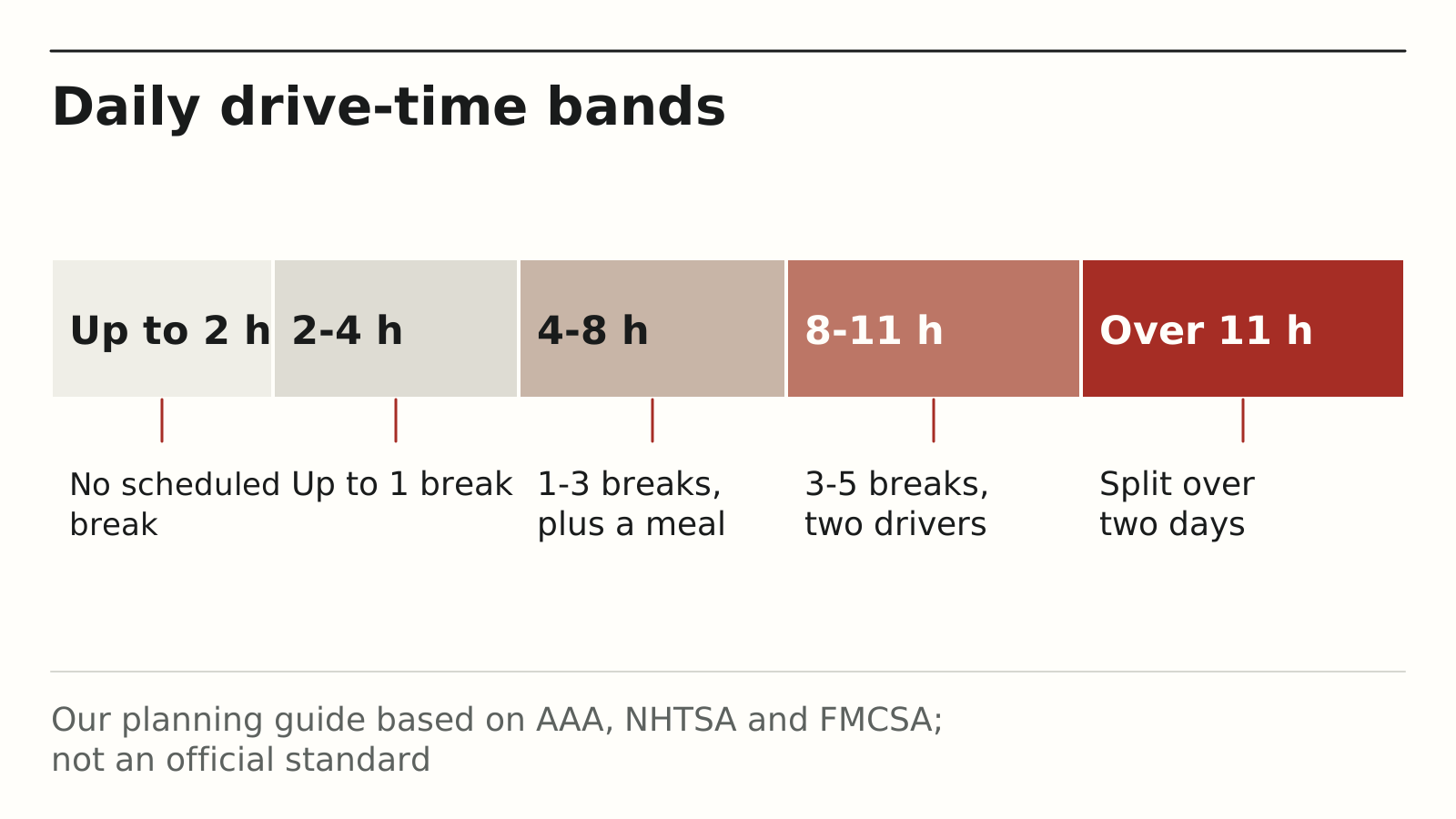
| Driving time in the day | En-route breaks (AAA cadence) | Drivers (our suggestion) | Plan notes |
|---|---|---|---|
| Up to 2 hours | None scheduled | One | Stop sooner if fatigue signs appear |
| 2–4 hours | Up to 1 | One | Avoid starting right after a poor night’s sleep |
| 4–8 hours | 1–3, plus a meal | One rested driver, or swap at a break | Keep the late-afternoon dip in mind (NHTSA) |
| 8–11 hours | 3–5 | Two, swapping at breaks | Start after a full night’s sleep; avoid midnight–6 a.m. (NHTSA) |
| More than 11 hours | — | — | Our suggestion: split over two days; one driver would exceed the federal daily limit for commercial truck drivers |
Two habits make every band easier. First, put the breaks on the route plan before you leave, as NHTSA advises, so stopping is part of the schedule rather than a sign of weakness. Second, swap drivers at a break, not when someone is already struggling. For trips with small children, the stop rhythm is set by the youngest passenger; the family guide shows how to plan stops for the youngest passenger and the driver.
Common mistake: Skipping breaks to “make good time.” An eight-hour driving day at AAA’s cadence has three stops along the way; at an assumed 15 minutes each that is 45 minutes plus a meal, and skipping them removes the rest that keeps you alert late in the day.
Takeaway: Pick the band for each driving day first, then set the route and lodging to fit it.
Fatigue warning signs: when to stop
Stop as soon as you notice a warning sign, whatever the schedule says. The CDC lists frequent yawning or blinking, trouble remembering the last few miles, missing an exit, drifting out of your lane and hitting a rumble strip as warning signs of drowsy driving.
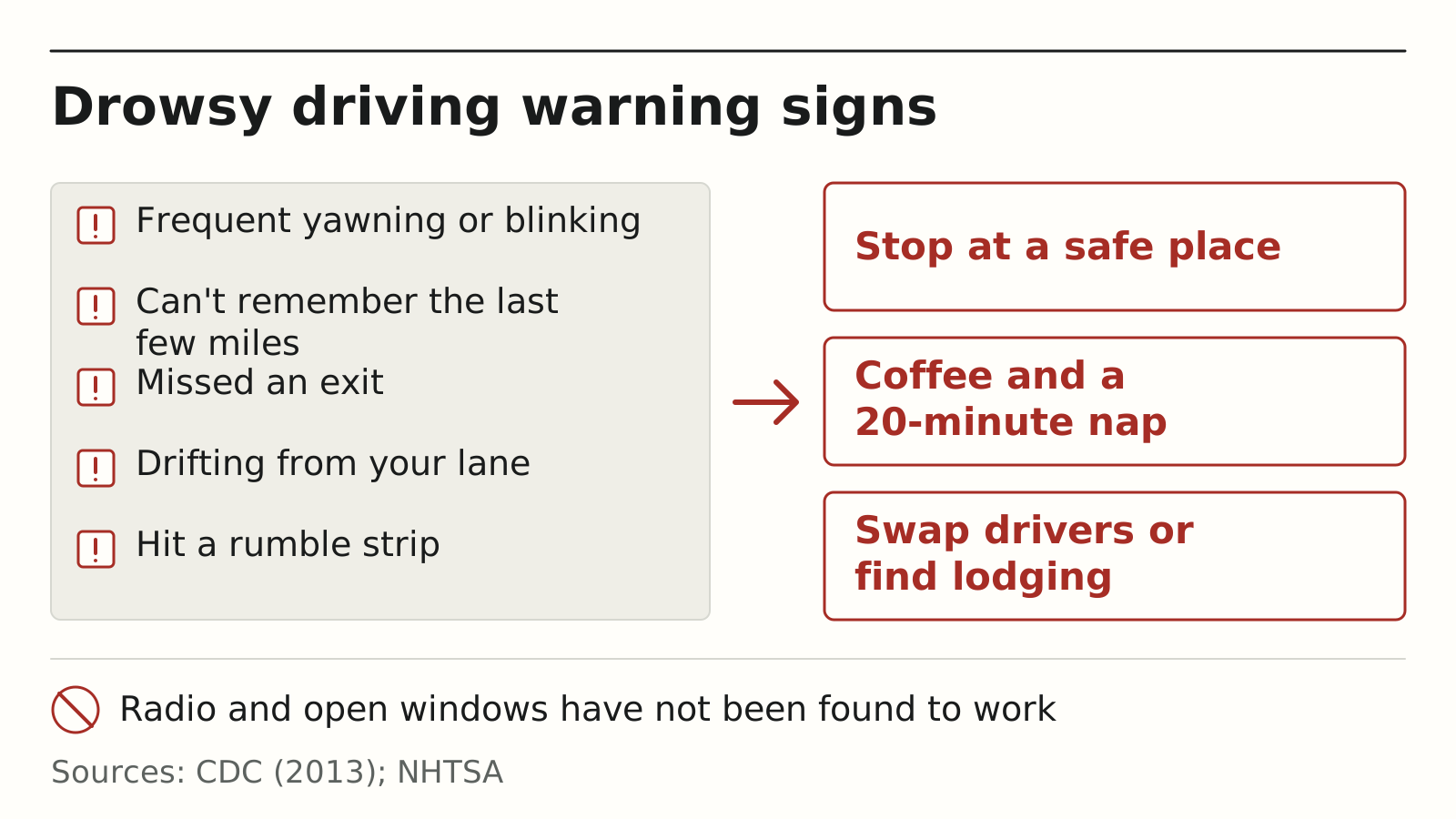
| Warning sign | What to do |
|---|---|
| Frequent yawning or blinking | Plan to stop at the next safe place |
| Can’t remember the last few miles | Stop now |
| Missed an exit | Stop now |
| Drifting from your lane | Stop now |
| Hit a rumble strip | Stop now |
What to do when you stop, according to NHTSA: drink one to two cups of coffee and take a short 20-minute nap in a safe place, such as a lighted, designated rest stop. NHTSA notes this has been shown to raise alertness only for a short time, so it buys a short window, not the rest of the day. If someone else is rested, swap drivers; if not, find lodging. With children aboard, never leave them in the car while you step out; the family guide sets out the hot-car rules for leaving the car.
Two facts make the signs worth taking seriously. NHTSA warns that a seriously sleep-deprived driver can have “micro sleeps” of four or five seconds even after coffee, and at 55 mph that is more than 100 yards of road. And AAA reports that more than half of drivers in fatigue-related crashes noticed no symptoms before falling asleep, which is why sleep before the trip matters more than any trick on the road. NHTSA counted 644 deaths in drowsy-driving-related crashes in 2024.
Common mistake: Opening the window or turning up the radio to push on. The CDC reports these techniques have not been found to be effective.
Takeaway: Treat any warning sign as a stop signal and use the coffee-and-nap break or a driver swap, not the radio.
How to make a long drive easier
Most of the comfort of a long drive is decided before you start: sleep, timing and planned stops. These tips combine AAA’s recommendations for longer trips with NHTSA’s road trip and drowsy-driving advice; more everyday-driving guides sit in the Car Lifestyle section.
Before you leave
- Sleep at least seven hours the night before; NHTSA notes that experts recommend seven to eight hours.
- Check prescription and over-the-counter medicine labels for drowsiness, and avoid alcohol before driving (NHTSA).
- Plan the day so most driving falls in hours when you are normally awake (AAA).
- Check weather, road conditions and traffic, and tell someone your route and arrival time (NHTSA).
- Get the car ready with our road trip checklist, so a preventable problem does not add hours to the day.
On the road
- Stop about every two hours or 100 miles (AAA).
- Avoid heavy meals (AAA).
- Travel with an alert passenger and take turns driving (AAA).
- Build the fuel, charge and rest stops into the plan instead of improvising them.
- In an EV, let charging stops double as rest breaks; the EV guide shows how to map charging stops along the route.
Use breaks for what NHTSA suggests: stretching, eating, returning messages and changing drivers.
Takeaway: Fix sleep, timing and planned stops before the trip; on the road, keep to the break cadence and share the driving.
What is the 3-3-3 rule for road trips?
The 3-3-3 rule is an informal pacing rule, popular with RV travelers, not an official safety standard. In the version RVshare describes, you drive no more than 300 miles a day, aim to arrive by 3 p.m., and stay at least three nights in one place.
| Part of the rule | What it means (RVshare version) | Why travelers use it |
|---|---|---|
| 300 miles | Drive no more than 300 miles in a day | Keeps the driving day short; Islands notes 300 miles is about five hours at 60 mph |
| 3 p.m. | Arrive at your stop by 3 p.m. | Daylight to arrive, park and settle in |
| 3 nights | Stay at least three nights in one place | Fewer moving days and more time at each stop |
Versions differ: Islands describes the third “3” as three days at each destination, and other travelers adjust the numbers to fit longer routes. The idea behind every version is the same as this guide’s table: short driving days and arrival before you are tired. A 300-mile day sits comfortably inside the 4–8 hour band above; if your route needs more, use the table rather than forcing the rule.
Takeaway: Use 3-3-3 as a pacing idea for relaxed trips, not as a safety rule you must meet or a limit you can safely ignore.
Can you drive 700 or 1,000 miles in one day?
A 700-mile day lands above eleven hours of moving time, so our planning table says split it; 1,000 miles is far beyond one day. The table shows the arithmetic, using assumed inputs: a 60 mph average moving speed, which excludes stops, and a 15-minute break every two hours at AAA’s cadence, added separately.
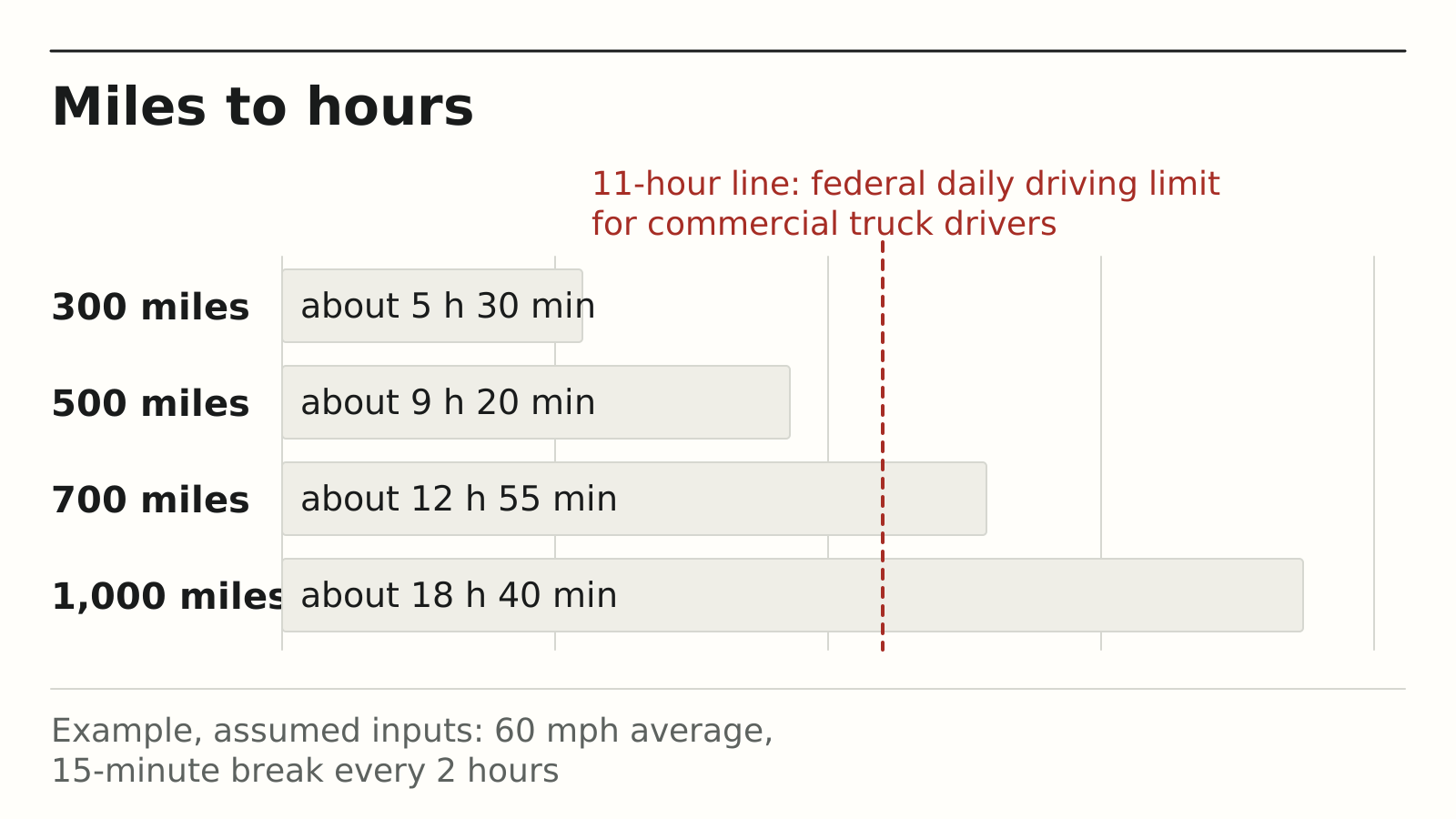
| Distance | Moving time at 60 mph (assumed) | Breaks (15 min each, assumed) | Total time | Band |
|---|---|---|---|---|
| 300 miles | 5 h | 2 | about 5 h 30 min | 4–8 hours |
| 500 miles | 8 h 20 min | 4 | about 9 h 20 min | 8–11 hours |
| 700 miles | 11 h 40 min | 5 | about 12 h 55 min | More than 11 hours |
| 1,000 miles | 16 h 40 min | 8 | about 18 h 40 min | More than 11 hours |
These figures are illustrations: cities, traffic and road works lower the moving average on many routes, so use the moving speed you expect on your own route and keep stops as a separate line, rather than folding them into the speed. The 700-mile day already passes the eleven-hour driving limit that applies to commercial truck drivers, and splitting it into two days is our suggestion. Before any long day, run the Stage 1 car checks a week ahead.
Takeaway: Convert miles to hours with your own moving speed, add stops separately, and split any day that lands above eleven hours.
When these tips do not apply
This guide is for private drivers in passenger cars. Adjust it in these cases:
- Commercial driving covered by FMCSA rules. Hours-of-service limits and break requirements apply; follow FMCSA’s official guidance, not this table.
- Sleep disorders or sedating medication. NHTSA and the CDC both name untreated sleep disorders and sedating medicines as risk factors; talk to a doctor before a long drive.
- Night or shift workers. The CDC lists night and long shifts as a risk factor for drowsy driving; after a shift, judge how much you have actually slept and rest before a long drive.
- Teen drivers. NHTSA notes many teens do not get enough sleep and advises them to delay driving until well rested.
- Towing, RVs and severe weather. Lower speeds and more demanding driving shorten the comfortable day; use smaller bands, and see what the car checklist leaves out for towing and winter routes.
Takeaway: If one of these applies, shorten the driving day or change the plan before you leave.
Related reading
Choose the next guide by what your trip still needs: car preparation, children aboard, or charging stops.
- Road trip checklist — Check the car, pack the roadside kit and plan stops in three stages.
- Family road trip checklist — Set the stop rhythm and packing list for children by age.
- How to plan an EV road trip — Turn charging stops into rest breaks and plan a backup.
- More car lifestyle articles — Practical guides to everyday driving.
- Road trip guides — Every road trip article on the site.
Methods and sources
This guide was compiled on October 7, 2026 from the AAA Foundation for Traffic Safety’s 2016 study of sleep and crash risk (police-reported crashes from 2005–2007, occurring between 6 a.m. and midnight, in which a vehicle was towed and emergency services were dispatched; its risk figures do not cover crashes between midnight and 6 a.m.), AAA’s 2016 recommendations, NHTSA’s drowsy-driving and road trip guidance, the CDC’s 2013 drowsy-driving report and FMCSA’s summary of hours-of-service rules. NHTSA, CDC and FMCSA pages were read from archived copies dated September–October 2026 because the live sites blocked our automated reader. The drive-time bands and the distance table are our own planning aids; the distance table uses assumed speeds and break lengths. We did not run any tests.