A forgotten diaper bag costs you a detour; a car seat used the wrong way can cost far more. Before packing anything for a family road trip, check that every child has the right seat for their age and size, then pack a reachable bag for each child, plan stops for whichever comes first, the youngest child’s needs or the driver’s break, and follow the hot-car rules whenever you leave the car.
Check every child’s seat against the seat maker’s limits, pack a bag for each child by age, stop for whichever comes first (the youngest child’s needs or the driver’s break), and never leave a child alone in the car. This checklist is for U.S. families driving long distances with babies, toddlers, school-age kids or teens. It groups what NHTSA and the American Academy of Pediatrics (through HealthyChildren.org) publish on car seats, travel with young children and hot cars into five steps, adds a packing table by age, and ends with a printable list. It is compiled from public sources, not our own testing, and it does not replace advice from your pediatrician or a certified car seat technician, or your state’s child passenger law.
| Item | Typical value or source | Why it matters |
|---|---|---|
| Under 1 year | Rear-facing car seat, always (NHTSA) | Cradles the head, neck and spine in a crash |
| 1–3 years | Rear-facing until the seat’s height or weight limit (NHTSA) | Turning forward early gives up that protection |
| 4–7 years | Forward-facing with harness and tether until its limit, then a booster (NHTSA) | The harness limits forward movement |
| 8–12 years | Booster until the adult belt fits: lap belt on upper thighs, shoulder belt across the chest; typically about 4 ft 9 in (AAP, NHTSA) | A belt that rides on the stomach or neck fits badly |
| Under 13 | Back seat (NHTSA, AAP) | The back seat is the safer place to ride |
| Stops | Children about every two hours, babies every 2–3 hours by day (AAP); drivers every two hours or 100 miles (AAA) | Stop for whichever comes first |
| Parked car | A car can heat up 20°F in 10 minutes (AAP) | Never leave a child alone in the car |
Step 1 — Check each child’s car seat before you pack
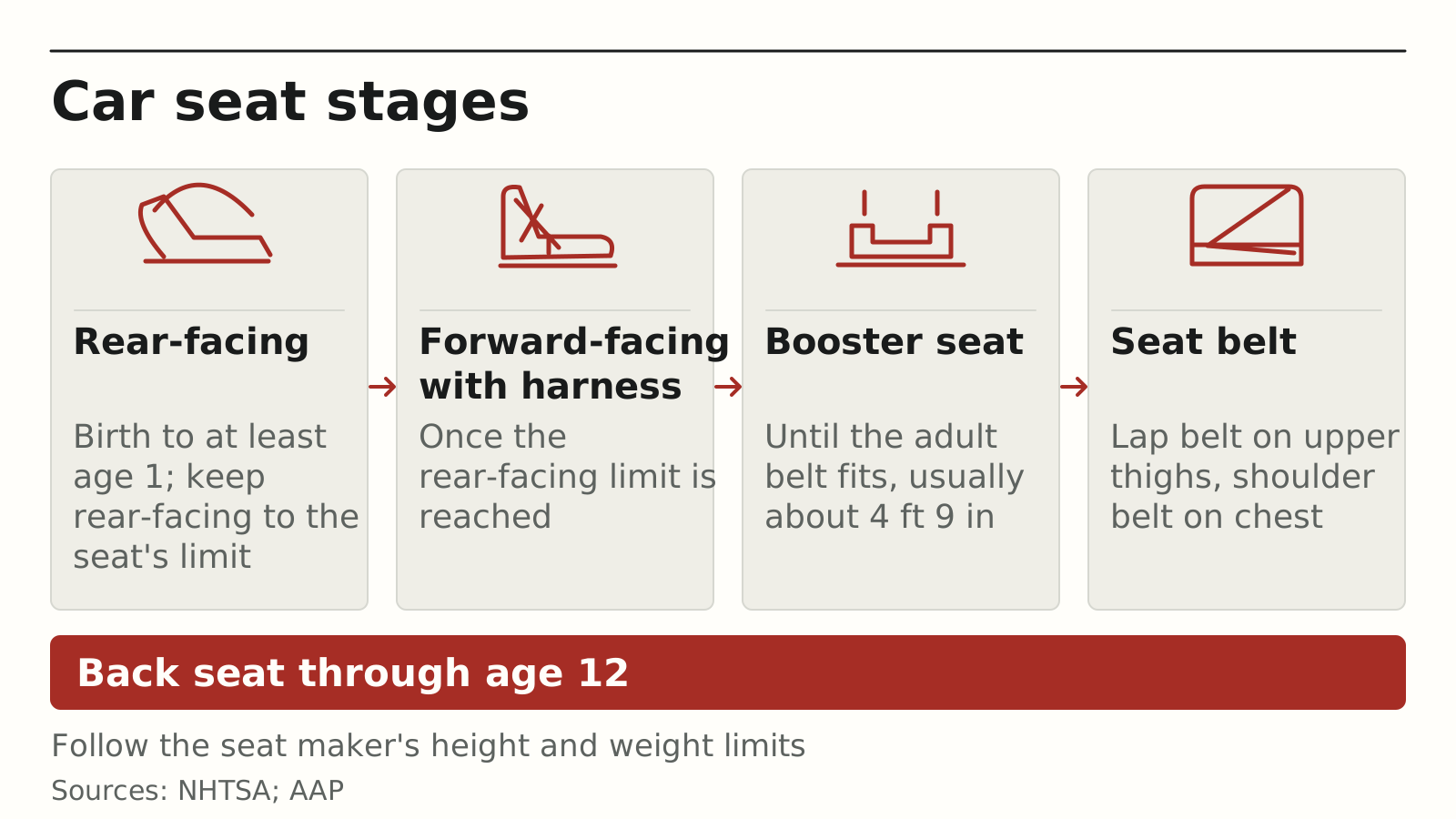
Match each child to a seat type by age, height and weight, check the seat maker’s limits, and install it the way both the seat manual and your vehicle manual describe, before the luggage goes in. Seats come first in the Five-Step Family Road Trip Check because a wrong seat or installation takes time to correct.
| Child | Seat type | Move on when | Source |
|---|---|---|---|
| Birth–12 months | Rear-facing seat (infant-only, convertible or all-in-one) | Age 1 is not a switch point; stay rear-facing (next row) | NHTSA |
| 1–3 years | Rear-facing as long as possible | They reach the seat maker’s top rear-facing height or weight | NHTSA |
| 4–7 years | Forward-facing seat with harness and tether | They reach the seat’s top forward-facing height or weight | NHTSA |
| 8–12 years | Belt-positioning booster in the back seat | The lap belt lies across the upper thighs and the shoulder belt across the chest, not the neck or face; usually about 4 ft 9 in | NHTSA; AAP |
| 13 and up | Seat belt, once it fits as above; the child also sits back with knees bent at the seat edge without slouching | Keep checking belt fit | NHTSA; AAP |
Installation points that matter on a long trip:
- Harnessed seats: one method, not two. Install a car seat with either the vehicle’s lower anchors or its seat belt. NHTSA says never both; the AAP adds that using both is only acceptable when both the seat and vehicle manufacturers allow it.
- Boosters work differently. A booster is always used with the vehicle’s lap and shoulder belt across the child. The AAP notes most boosters simply rest on the seat, while some models also attach with lower anchors or a tether; follow the booster and vehicle manuals.
- Use the top tether on every forward-facing seat when your seat and vehicle allow it.
- Check the lower-anchor limit. Lower anchors are rated for 65 pounds of child plus seat combined; newer seats print the maximum child weight on the label.
- No rear-facing seat in front of an airbag. The AAP is explicit on this.
- Get it inspected. NHTSA’s inspection station locator lists certified technicians who check seats free of charge in most cases, and some offer virtual checks.
- Register the seat with its manufacturer so recall notices reach you.
Renting a car? The AAP notes rental companies can arrange a seat but the selection is limited; check that it suits your child’s size, looks in good condition and comes with its manual before accepting it.
Common mistake: Turning a toddler forward-facing at their second birthday. NHTSA’s guidance is to keep children rear-facing until they reach the seat maker’s top height or weight limit, not until a set age.
Takeaway: Finish seat checks, and any inspection, at least a few days before departure.
Step 2 — Pack by age
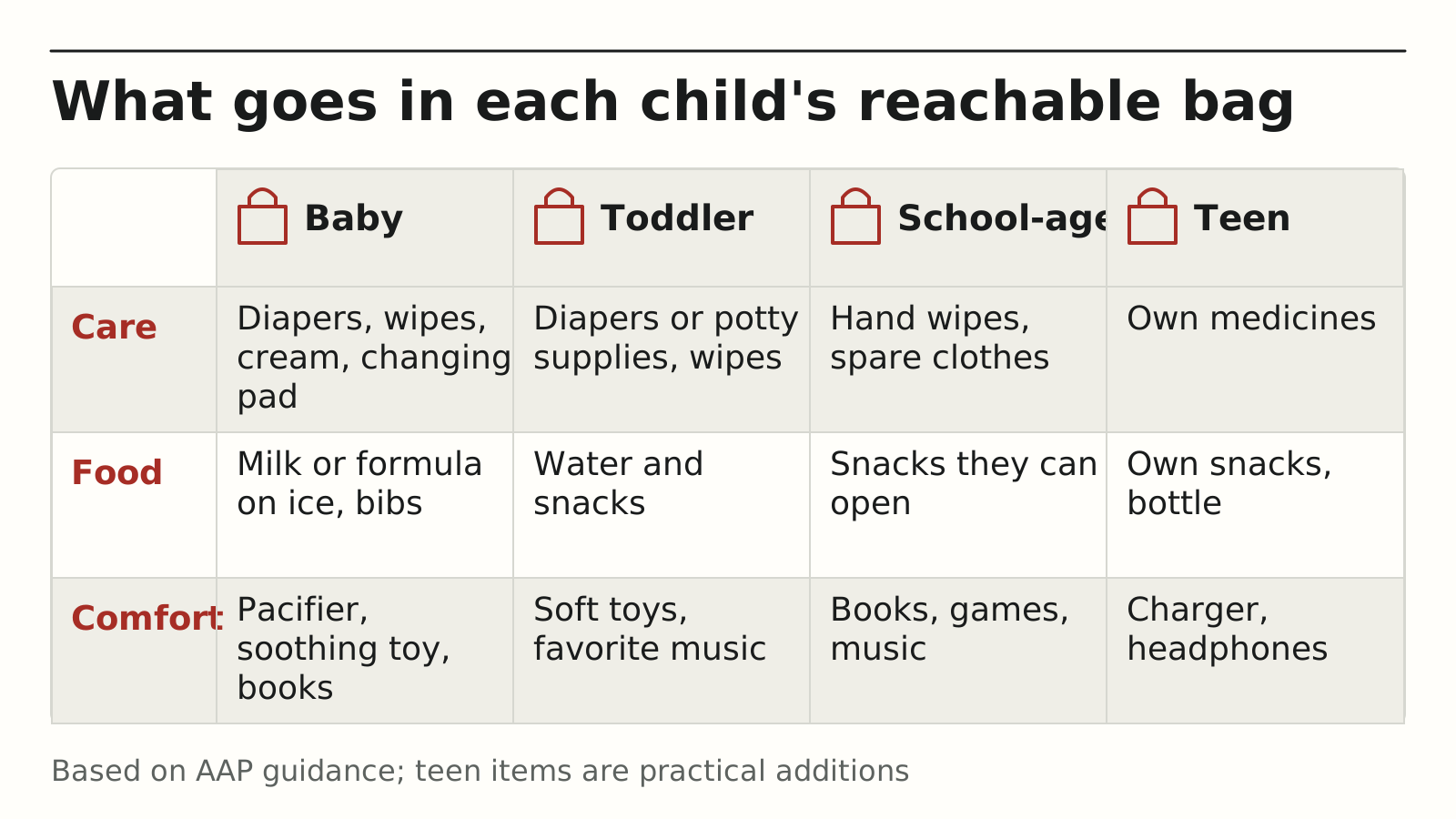
Pack one reachable bag per child, sorted by what that age needs in the car, and keep the family emergency kit separate. The infant and toddler rows draw on the AAP’s guidance for travelling with babies and young children; the teen row lists practical additions rather than sourced requirements.
| Age | Care items within reach | Food and drink | Comfort and entertainment |
|---|---|---|---|
| Baby (under 1) | Diapers, wipes, diaper cream, changing pad, spare clothes, garbage bags, hand sanitizer (AAP) | Formula or breast milk kept on ice or in a cooling bag, bibs (AAP) | Pacifiers, a favorite soothing toy, books, music (AAP) |
| Toddler (1–3) | Diapers or potty supplies, wipes, diaper rash ointment, spare clothes (AAP) | Safe water and snacks (AAP) | Soft, lightweight toys and favorite music (AAP) |
| School-age (4–12) | Child-safe hand wipes, a change of clothes, any medicines | Water and snacks they can open themselves | Books, games, music; pointing out sights along the way (AAP) |
| Teen (13+) | Own medicines, a refillable bottle | Their own snacks | Charger, headphones, downloaded music or books for low-signal stretches |
For the whole family, the AAP also suggests a water- and insect-proof ground sheet so small children have a clean, safe spot to play at rest stops. Keep medicines in their labeled containers.
Two packing rules make the bags work. First, everything a child needs between stops goes in the cabin, not the trunk. Second, the adult riding in the back with a baby, as the AAP recommends, should be able to reach the bag without unbuckling.
The car’s own emergency kit is a separate list, covered in our road trip checklist under Stage 2, packing the car.
Takeaway: Pack each child’s bag by age and keep it in the cabin, separate from the car’s emergency kit.
Step 3 — Plan stops for the youngest passenger and the driver
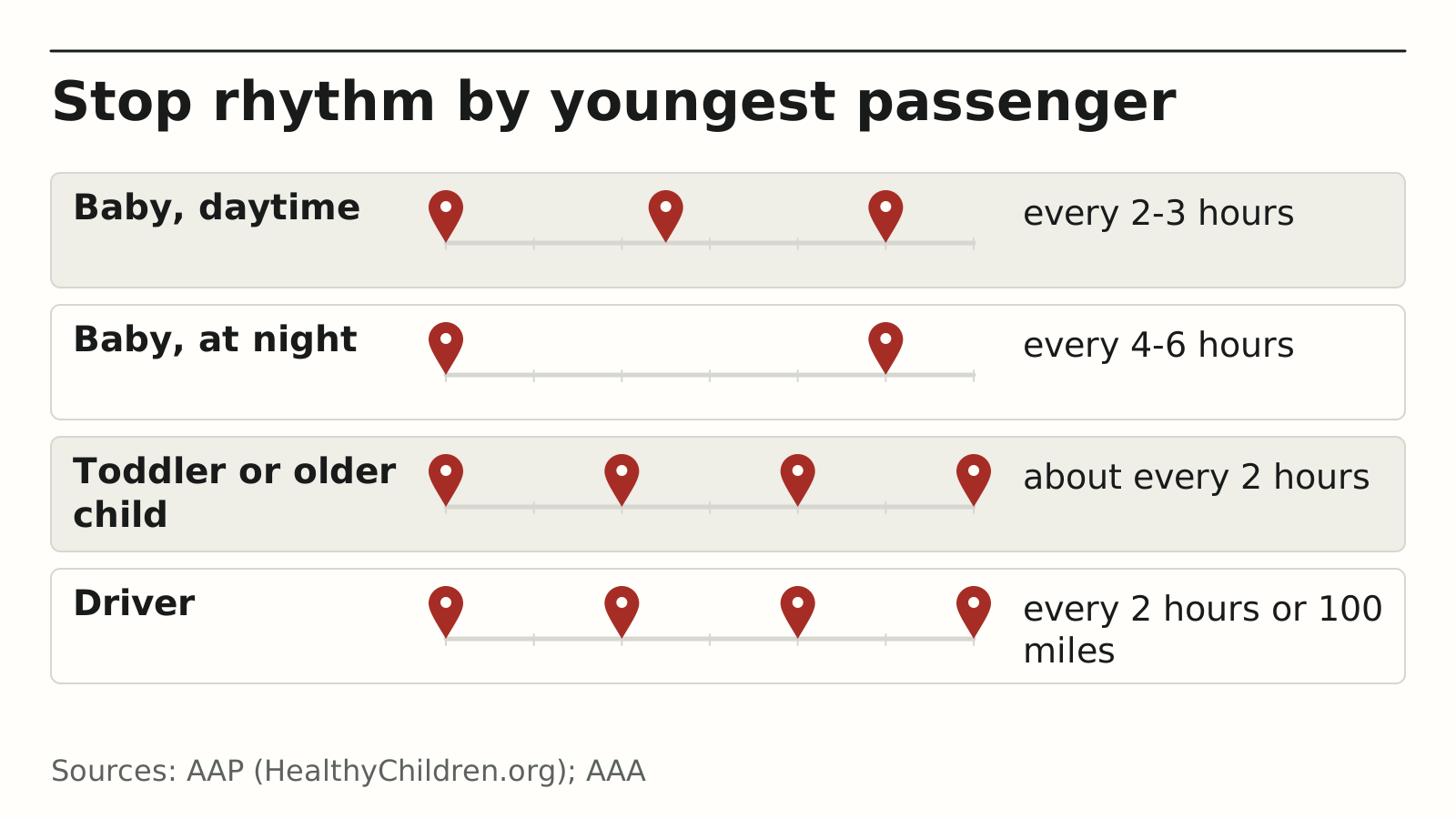
Stop for whichever comes first: the youngest child’s needs or the driver’s break. The AAP suggests stopping about every two hours to give you and your child a break; for babies, its pediatrician guidance is every two to three hours by day, and AAA recommends a driver break every two hours or 100 miles.
| Youngest passenger | Stop about every | What the stop is for | Source |
|---|---|---|---|
| Baby, daytime | 2–3 hours | Feeding, diaper change, a stretch out of the seat | AAP |
| Baby, at night (care interval, not a driving limit) | 4–6 hours | Feeding and changing | AAP |
| Toddler or older child | 2 hours | Restroom, snacks, movement | AAP |
| Driver (any trip) | 2 hours or 100 miles | Alertness | AAA |
Two cautions sit next to this table. The AAP pediatrician guidance notes that car seats are not ideal for very long stretches when a sleeping baby is not closely watched, and that you should never breastfeed in a moving car. And while the same guidance suggests driving through a baby’s night sleep on long trips, NHTSA advises avoiding the peak sleepiness periods, between midnight and 6 a.m. and in the late afternoon; if you must drive then, watch for signs of drowsiness and stop when they appear, because being rested does not remove the risk. Our long-drive guide covers the fatigue warning signs that mean you must stop.
To turn the rhythm into a day plan, convert your route into driving hours with the daily drive-time planning table, then add a stop for each interval. A seven-hour drive with a toddler, for example, needs about three stops, plus a meal. In an electric car, schedule charging stops along the route so they coincide with these family breaks.
Before each leg, run a quick reset drawn from the AAP’s guidance for babies and young children:
- Harness straps pulled snug on every child in a harnessed seat.
- A rear-facing infant seat still at the angle the seat maker specifies, so the baby’s head cannot slump chin-to-chest.
- The reachable bag restocked with diapers, wipes, water and snacks.
- An adult or responsible older child seated next to the baby, if you have one.
Takeaway: Plan a stop at the shorter of the child’s care interval and the driver’s two-hour break, and keep the driver’s day on a rested schedule.
Step 4 — Hot-car rules whenever you leave the car
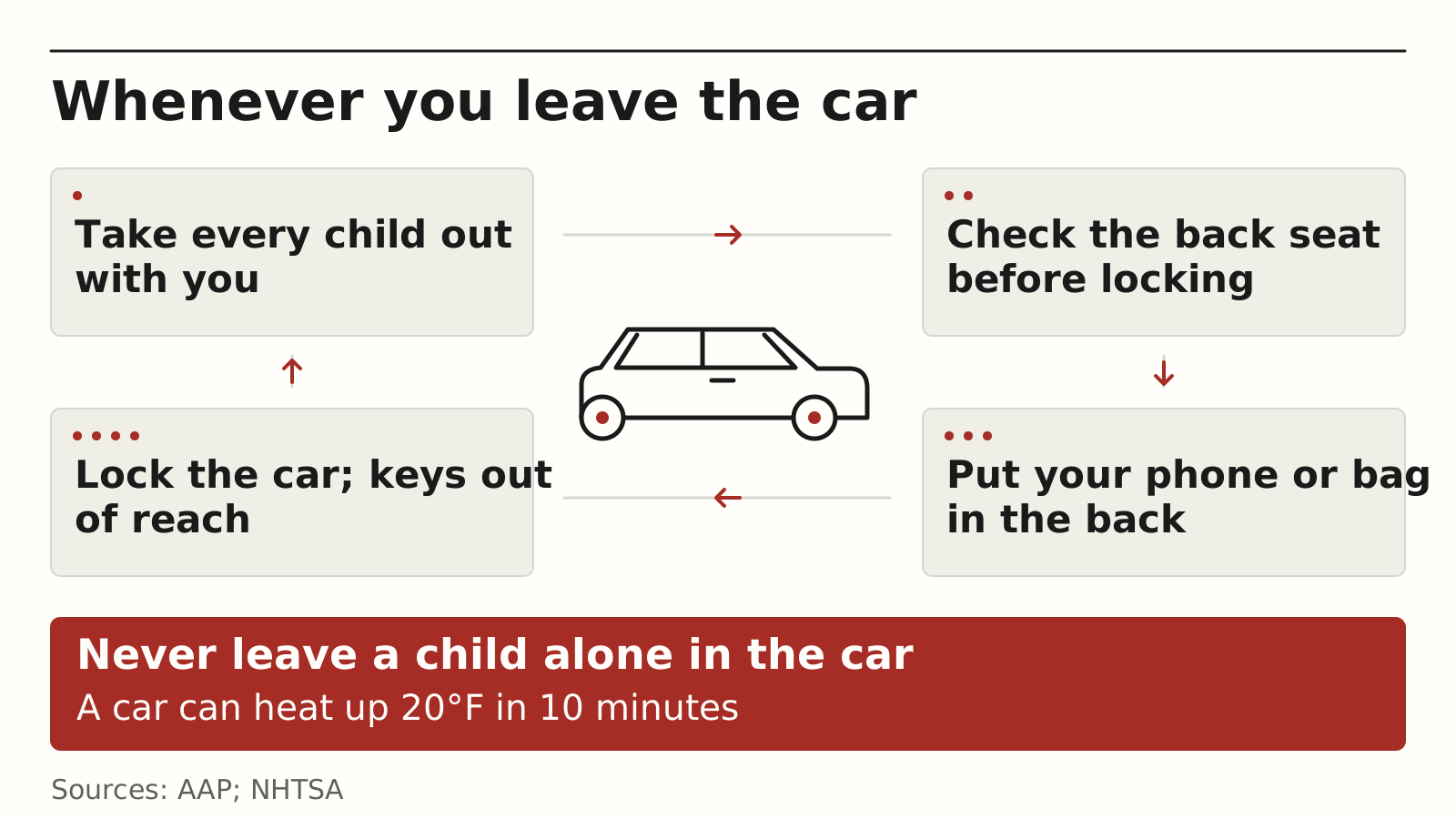
Every stop is a moment when a child can be left in a parked car. Never leave a child alone in a car, even for a minute: the AAP reports a car can heat up 20°F in 10 minutes, and NHTSA notes a child’s body temperature rises three to five times faster than an adult’s.
What the sources say about heat in a parked car:
- A car can heat up 20°F in just 10 minutes (AAP).
- A child’s major organs begin to shut down at a body temperature of 104°F, and a child can die at 107°F (AAP).
- Cracking a window, parking in the shade or running the air conditioning does little to change the temperature inside (AAP).
- Heatstroke can happen when the outside temperature is as low as 57°F (AAP); NHTSA gives 60°F with the windows cracked as an example.
- One in four hot-car deaths happen when a child gets into a car and accidentally locks themselves inside (AAP).
What the AAP and NHTSA advise:
- Never leave a child alone in the car, even for a minute.
- Check the back seat and make sure all children are out before you lock the car and walk away.
- Put your phone, bag or wallet in the back seat so you have to look there.
- Keep the car locked when it is parked, and keep keys out of children’s reach.
- Keep fold-down rear seats closed so a child cannot crawl into the trunk.
- Walk around the car before backing out of a parking space to check for children.
Our suggestion for road trips: whenever the adults leave the car, every child comes too, even for a quick coffee.
Road trips break routines, and the AAP advises being extra alert whenever your routine changes. Agree before you leave which adult takes which child out at each stop.
Common mistake: Leaving a sleeping baby in the car “for two minutes” with the windows down. The AAP notes that cracking the windows does little to stop the temperature rising.
Takeaway: Make “every child out with you, back seat checked, car locked” the routine whenever you leave the car.
Step 5 — Get the car itself ready
A family car needs the same pre-trip checks as any other: tires, recalls, fluids, lights and an emergency kit. Run them about a week before departure with our three-stage road trip checklist, which starts with the Stage 1 car checks.
Two family-specific additions: check that every seating position you plan to use for a car seat has the anchors or belt type the seat needs, and test the rear door child locks and window locks. If you are driving an electric car, line up charging stops so they fall near your planned family breaks; the EV road trip planning guide covers that.
Takeaway: Book the car checks a week out, so a repair does not land on the day the family is packed.
The printable family road trip checklist
Print this section or copy it into your phone’s notes. It is grouped by when to do each task; the full packing list by age is in the Step 2 table.
About a week before
- Each child in the right seat type for age and size (Step 1)
- Harnessed seats installed with lower anchors or seat belt (both only if both manuals allow); top tether on forward-facing seats
- Boosters used with the lap and shoulder belt; belt fit checked on each booster rider
- Seats inspected and registered for recalls
- Car checked: tires, recalls, fluids, lights (use the printable car checklist)
- Safe sleep space booked or packed for a baby at the destination
The day before
- One reachable bag per child (Step 2)
- Baby: diapers, wipes, cream, changing pad, clothes, garbage bags, sanitizer
- Toddler: diapers or potty supplies, wipes, soft toys, music
- School-age: snacks they can open, books, games
- Teen: own medicines, charger, headphones
- Feeding supplies on ice or in a cooling bag
- Water and snacks for every passenger
- Medicines in labeled containers
- Toys, books, music, chargers
- Car emergency kit packed separately
Each driving day
- Stops planned for whichever comes first: the youngest child’s needs or the driver’s break (Step 3)
- Driver rested; midnight–6 a.m. and the late-afternoon dip avoided where possible; stop at the first sign of drowsiness (see how long to drive each day)
- Whenever the adults leave the car: every child out, back seat checked, car locked (Step 4)
Takeaway: Work through the list a week ahead, then again the night before.
When this checklist does not apply
This checklist is written for U.S. families driving private cars. Change the plan in these cases:
- Children with special health care needs. Seating and medical equipment need specialist advice; the AAP points families to the National Center for the Safe Transportation of Children With Special Health Care Needs.
- Newborns, premature babies or a recent illness. Talk to your pediatrician before a long car trip.
- Your state’s law. Child passenger laws vary by state; this page follows NHTSA and AAP best-practice guidance and does not interpret any law.
- Flying part of the way. Air travel is outside this checklist; check your airline’s car seat policy and the AAP’s family travel guidance.
- Driving abroad. The AAP warns road travel can be far more hazardous in some countries, and seat availability differs.
Takeaway: If one of these applies, get specialist or legal advice before you rely on this checklist.
Related reading
Choose the next guide by what is still open: the car itself, the length of each driving day, or charging an electric car.
- Road trip checklist — Check the car, pack the emergency kit and plan fuel or charging stops.
- Long drive tips and daily driving limits — Decide how long each driving day should be and when to stop.
- How to plan an EV road trip — Combine charging stops with family breaks.
- More road trip guides — Every road trip article on the site.
Methods and sources
This checklist was compiled on October 7, 2026 from NHTSA’s car seat, summer driving and drowsy-driving guidance and from American Academy of Pediatrics articles on HealthyChildren.org about family travel, car seats, travelling with babies and hot cars, with AAA’s 2016 rest-break recommendation. NHTSA pages were read from archived copies dated September–October 2026 because the live site blocked our automated reader. Age bands follow NHTSA’s published recommendations; your seat maker’s height and weight limits take priority. The teen packing row is our practical suggestion, not a sourced requirement. We did not test any car seats or products.