Buying a ticket ahead of time will not hold a space for your car. To take a Seattle ferry with a car, choose Washington State Ferries to Bainbridge Island or Bremerton, join the vehicle queue at Colman Dock, show or buy the correct ticket at the tollbooth, and board when directed.
Neither of these Seattle routes offers vehicle reservations. Plan the return before leaving: the car-and-driver fare is payable in both directions, even though additional passenger fares are collected on the Seattle side. This guide covers those two WSF routes for ordinary car trips; it does not cover international travel or San Juan Islands reservations.
Choose the ferry that carries your car
Select the operator as well as the destination. Washington State Ferries carries vehicles on both Seattle–Bainbridge Island and Seattle–Bremerton. The Kitsap Transit Bremerton Fast Ferry is passenger-only, so it cannot take your car across.
| Trip from downtown Seattle | Operator and service | Car aboard? | Seattle departure point |
|---|---|---|---|
| Bainbridge Island | Washington State Ferries | Yes | Colman Dock, Pier 52 |
| Bremerton | Washington State Ferries | Yes | Colman Dock, Pier 52 |
| Bremerton on the Fast Ferry | Kitsap Transit passenger-only ferry | No | Pier 50 |
Sources: WSF Seattle terminal and Kitsap Transit Bremerton Fast Ferry, checked October 15, 2026.
Choose Bainbridge or Bremerton by where you need to drive after landing. Put the destination terminal into your onward route plan before comparing departures. A boat that leaves sooner may still take you farther from your destination; compare the complete trip rather than the crossing alone.
If you are deciding to leave the car behind, treat that as a different plan: arrange parking and onward transport first. Our Seattle Link park-and-ride guide covers station parking rules; it does not establish parking permission near the ferry dock.
A ticket pays the fare; it does not reserve a sailing
WSF’s first-time rider guide lists vehicle reservations for Anacortes–San Juan Islands and Port Townsend–Coupeville. Neither Seattle route is on that list. You can buy a ticket online or on arrival, but the Seattle terminal explicitly says advance Wave2Go tickets do not guarantee vessel space.
| What you have | What it does | What to plan next |
|---|---|---|
| A departure on the timetable | Gives you a sailing to aim for | Check the travel date and current service alerts |
| A prepaid ticket | Covers the fare for its ticket category | Join the correct vehicle queue and present the ticket |
| A position in the vehicle line | Places you in the terminal’s loading process | Wait for staff instructions; allow flexibility if the sailing fills |
Do not plan a flight, timed admission or rental return on the assumption that prepayment guarantees a particular boat. Our recommendation is to identify a later sailing you could use before committing to the day. A timetable is useful for planning, but it is not a prediction of your queue time.
Work out the cost in both directions
Use the official fare page for Seattle–Bainbridge Island or Seattle–Bremerton. Select your travel date, direction, vehicle category and passenger counts. Use its round-trip display when returning on the same route, and check the reverse direction if the dates or party change.
The collection pattern below applies to both of these WSF routes, according to their official fare pages checked October 15, 2026.
| Fare component | Leaving Seattle | Returning from Bainbridge or Bremerton |
|---|---|---|
| Vehicle plus its driver | Vehicle-and-driver fare | Vehicle-and-driver fare again |
| Additional fare-paying passengers in the car | Passenger fares collected here | Passenger fares are not collected here |
| Youth passengers under 19 | No passenger fare | No passenger fare |
| Teenage driver | Adult vehicle-and-driver fare applies | Adult vehicle-and-driver fare applies |
The driver is already included in the vehicle-and-driver item. Count the other occupants separately, using the eligibility categories in the calculator. A passenger’s return collection rule does not make the return vehicle crossing free.
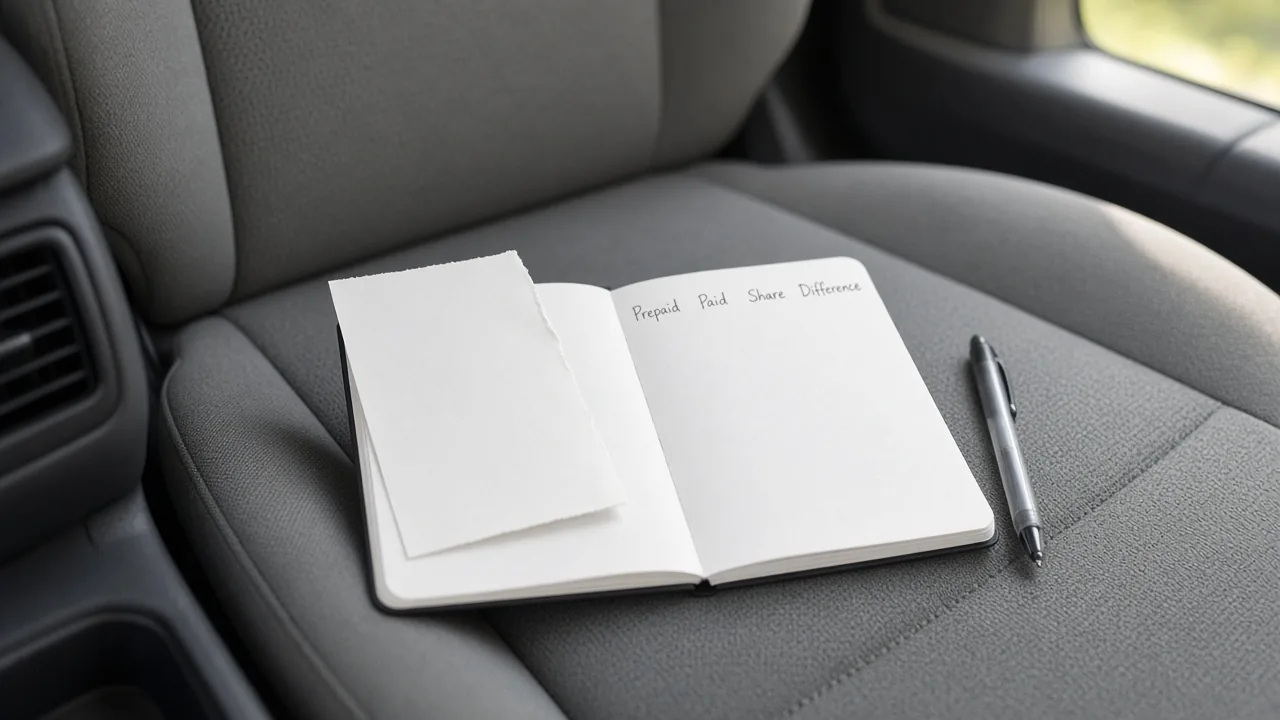
Copy this fare worksheet into your trip notes
| Entry | Your amount or detail |
|---|---|
| Outbound route and date | __________ |
| Vehicle category, including anything towed | __________ |
| Outbound vehicle-and-driver fare | __________ |
| Additional passenger fares collected Seattle-side | __________ |
| Return route and date | __________ |
| Return vehicle-and-driver fare | __________ |
| Applicable payment fees | __________ |
| Total of the fare and fee amounts above | __________ |
For a driver traveling alone, the ordinary same-route return budget has two vehicle-and-driver fare items. Adding another fare-paying adult adds the Seattle-side passenger fare. These are budget structures, not dollar quotes; enter current calculator amounts in the blank cells.
Under WSF’s ticket rules, vehicle dimensions affect the fare, including what you tow. Verify the category before buying; ask WSF about oversized or commercial vehicles. WSF lists a vehicle-and-driver peak-season surcharge from May 1 through September 30 and, as of this check, a 3% credit/debit card payment recovery fee. Check the current rules for your travel date and payment method rather than relying on an old travel-blog price.
Arrive, queue and board at Colman Dock
The Seattle terminal address is 801 Alaskan Way, Pier 52. Use the live terminal directions and cameras before approaching. Its vehicle directions currently specify entry from the northbound Alaskan Way lanes at Yesler Way, with signs for the Bainbridge and Bremerton queues. Follow current signs and staff if the approach changes.
WSF recommends being in line at the tollbooth at least 20 minutes before sailing for most routes. That is an arrival recommendation, not a promise of boarding or an estimate of how long the line will take. Leave additional flexibility for traffic and queues. The terminal’s holding-area space display excludes cars that have not yet passed through a tollbooth; use its cameras too.
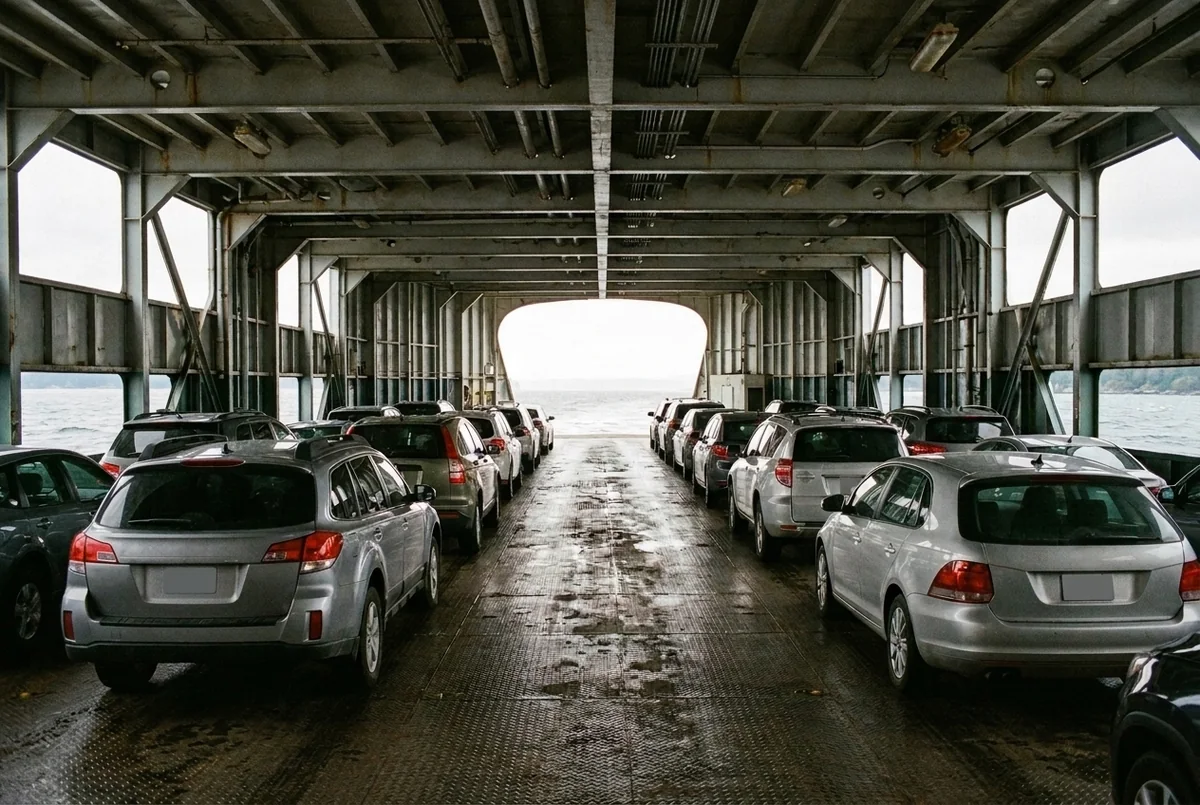
- Join the destination queue. Keep the route name handy; ask staff if you are unsure which line to use.
- Show or buy your ticket at the tollbooth. Have the vehicle details and additional passenger counts ready.
- Follow employees aboard. Let them direct the car into position.
- Secure the car. WSF tells drivers to apply the parking brake and turn off the car alarm. You may leave the vehicle once aboard.
- Listen for announcements. Return to the car when asked and follow crew instructions to unload.
Those boarding instructions come from WSF’s first-time rider guide. If you need help maneuvering, ask the crew before moving.
Plan the return while you still have options
Check the reverse timetable and alerts before the outbound trip, then check again before heading back to the terminal. A successful outbound crossing does not hold a return vehicle space. If you need to be back for a fixed appointment, our planning advice is to leave room for a later boat rather than aim for the last usable departure.
Save the return terminal, intended departure and alternative in your notes. Set aside the return vehicle-and-driver fare even if nobody else in the car needs a passenger fare collected on that side. If you return by a different route, recalculate that trip instead of reusing a same-route total.
For a rental car, confirm the supplier’s ferry-use permission and return requirements before travel. For vehicle preparation before the driving portion, use our car road-trip checklist.
Before you drive to the dock
- WSF vehicle route selected: Bainbridge Island or Bremerton.
- Outbound and return timetables, terminal directions and current alerts checked.
- Vehicle category and any towing details confirmed.
- Vehicle-and-driver fares budgeted in both directions; additional passengers counted separately.
- Ticket and payment method ready; no reserved-space assumption.
- Time allowed for the approach and queue, with an alternative sailing identified.
- Rental permission checked, if applicable.
Method and source date
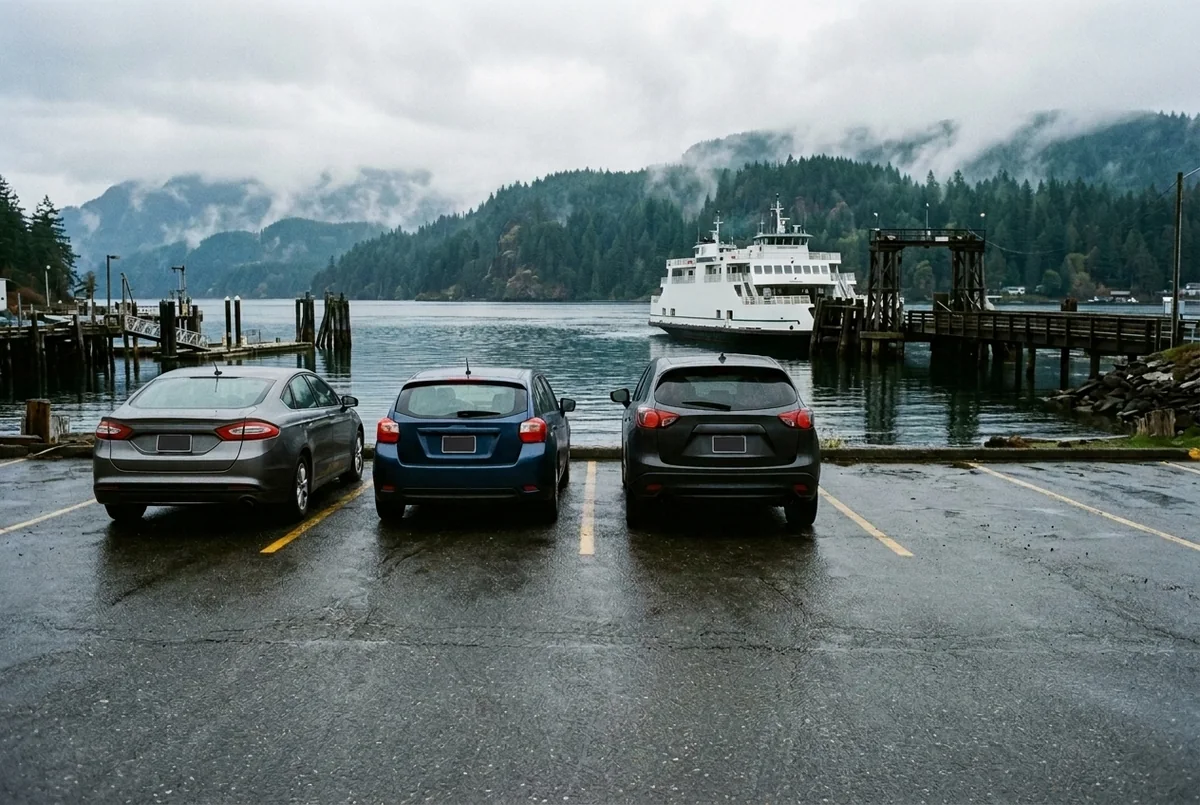
Compiled from Washington State Ferries and Kitsap Transit public information accessed October 15, 2026. This is a planning guide based on published operator instructions, not a report of a firsthand crossing. The photographs show generic ferry settings and do not identify a terminal or vessel. Use the operators’ current schedules, alerts, fare tools and crew instructions for the actual trip. Prices, future departures and waiting times are not fixed in this guide.