A hybrid’s city advantage is the wrong forecast for a highway day, because the braking that feeds the battery is mostly gone. Mountain roads add a climb, where the motor can assist, and a descent, where a hard brake throws that recovery away.
Regenerative braking helps most where the car stops and starts. On a highway with little braking it offers little advantage over a conventional vehicle. On a grade the motor can assist the climb, and only gentle or moderate braking puts descent energy back in the battery. A conventional hybrid is not a car you plug in.
A plug-in hybrid that can fall back on gasoline is a different plan, covered in the EV road-trip guide. This page stays with the hybrid that carries its own fuel and uses braking to make electricity.
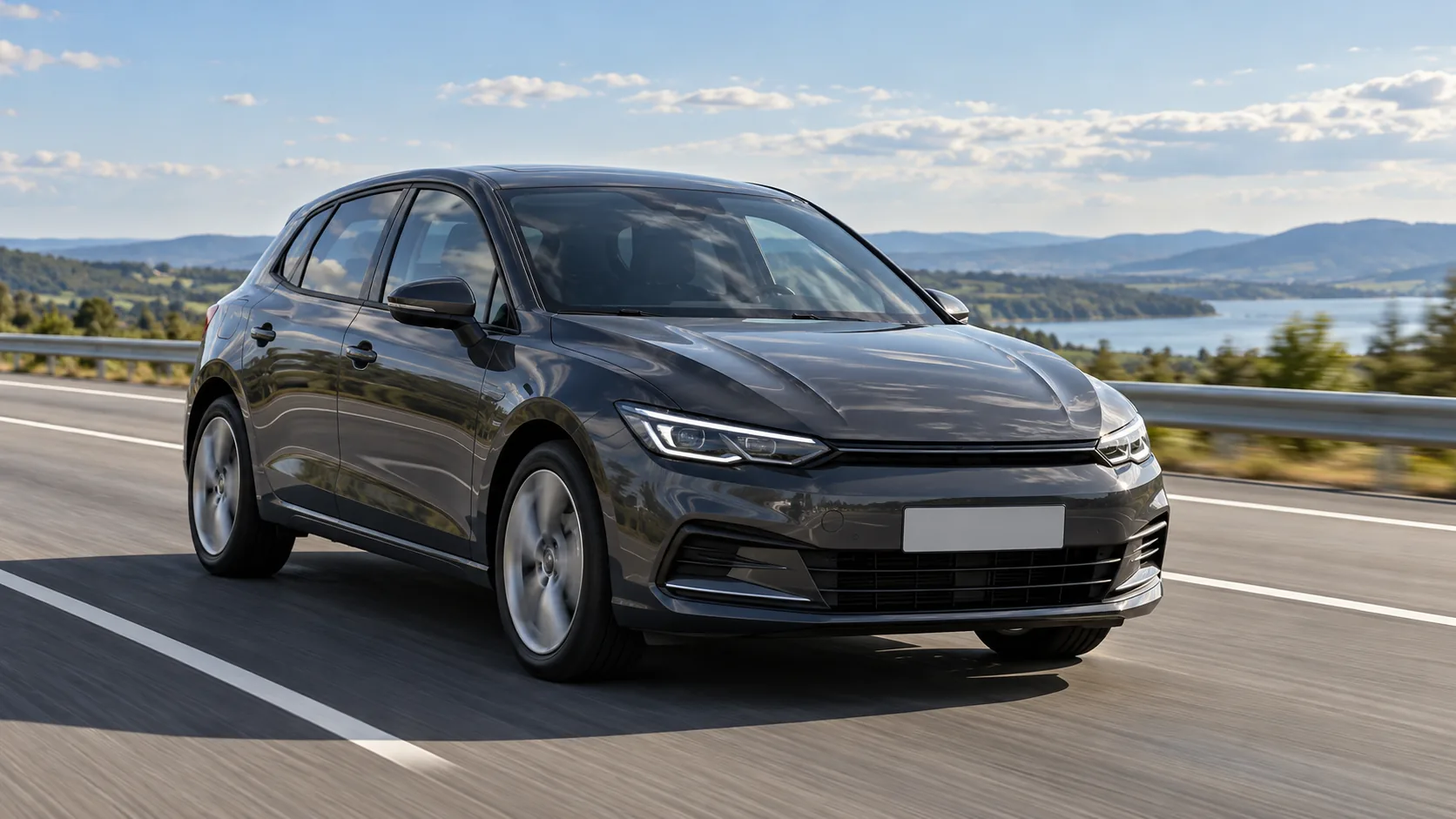
A highway has long stretches with little braking. The car is not a named model, and the photograph is not a fuel-economy test.
Which part of the hybrid is doing the work?
Keep the city mechanism, the highway mechanism, and the grade mechanism in different rows. A combined label averages the first two.
| Situation | What the published sources say, retrieved 20 October 2026 | Dominant failure mode and prevention |
|---|---|---|
| Stop-and-go city | fueleconomy.gov: hybrids are more efficient than comparable conventional vehicles especially in stop-and-go driving, from regenerative braking, motor assist, and stop-start. The engine can shut off at a stop. The city energy diagram is the EPA FTP-75 cycle. About 24% to 38% of the fuel’s energy moves the car, depending on the drive cycle. | Reading 24% to 38% as a miles-per-gallon promise. It is the share of fuel energy that reaches the road on that cycle, not a tank result. |
| Highway | The same page: there is little braking in highway driving, so regenerative braking offers little advantage over a conventional vehicle on the highway. | Expecting the city gap to survive a freeway day. The advantage fueleconomy.gov ties to braking is the one the highway does not supply. |
| Hill climb | 2026 Fuel Economy Guide: the electric motor assists the engine when accelerating or hill climbing, and at low speeds, where a combustion engine is least efficient. Full hybrids (HEV in the Guide) can store more and sometimes move on the motor alone for a short distance. Mild hybrids (MHEV) have a smaller effect on fuel economy. | Treating a mild hybrid’s assist as a full hybrid’s. The Guide says the effect varies with battery and motor size. |
| Downhill braking | fueleconomy.gov tips: anticipate the stop and brake gently or moderately so regenerative braking can store electricity. Hard braking uses the friction brakes, which do not recover energy. Designs differ; the owner’s manual is the model-specific page. | Riding the friction brakes down a grade and calling it charging. Hard braking is the case the tip says does not recover energy. |
The Guide also says conventional hybrids cannot be plugged in. Gasoline and regenerative braking provide the energy. Stop-start, which hybrids have, can improve fuel economy by up to 5%, with the biggest benefit where the engine would otherwise idle. That 5% ceiling is an idle benefit, not a highway benefit.
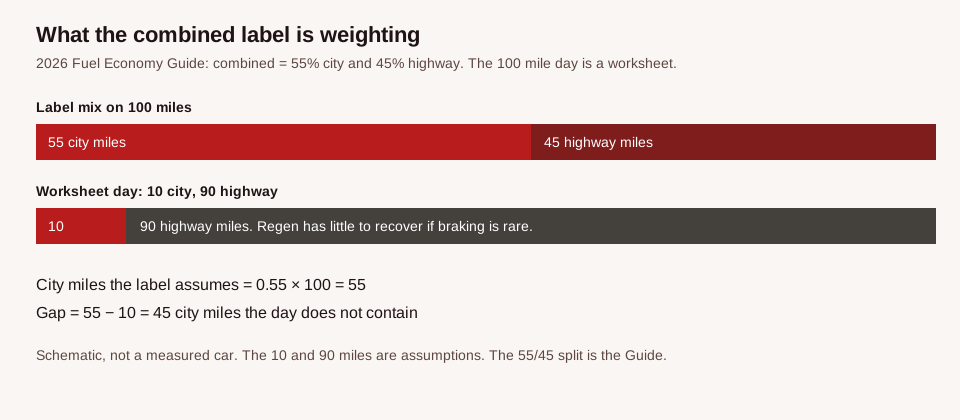
The red block is city driving. The Guide’s combined figure is 55% city and 45% highway. The lower bar is a worksheet day, not a logged trip.
How far is a highway day from the label’s mix?
The 2026 Fuel Economy Guide defines the combined estimate as 55% city and 45% highway. Annual figures in that Guide assume 15,000 miles with the same 55/45 split. A day that is almost all highway is not that split.
City miles the label assumes = 0.55 × D
D is the distance in miles. For a worksheet day of 100 miles:
- City miles the label assumes = 0.55 × 100 = 55 miles.
- Highway miles the label assumes = 0.45 × 100 = 45 miles.
Now a day that is 10 miles of town and 90 miles of highway, including the grade. Those 10 and 90 are assumptions so the subtraction can be checked. They are not a Guide test.
Gap = 55 − 10 = 45
The day contains 45 fewer city miles than the combined label’s mix. The regenerative-braking advantage fueleconomy.gov ties to stop-and-go traffic sits in the city miles, not in the 90. On those 90, the same page’s highway sentence applies: little braking, so little advantage from regeneration over a conventional vehicle.
That gap is not a fuel-saved number. The Guide does not publish a hybrid-versus-gasoline miles-per-gallon difference for this mix, and this page does not invent one. What it does say is that the combined sticker is the wrong weight for the day.
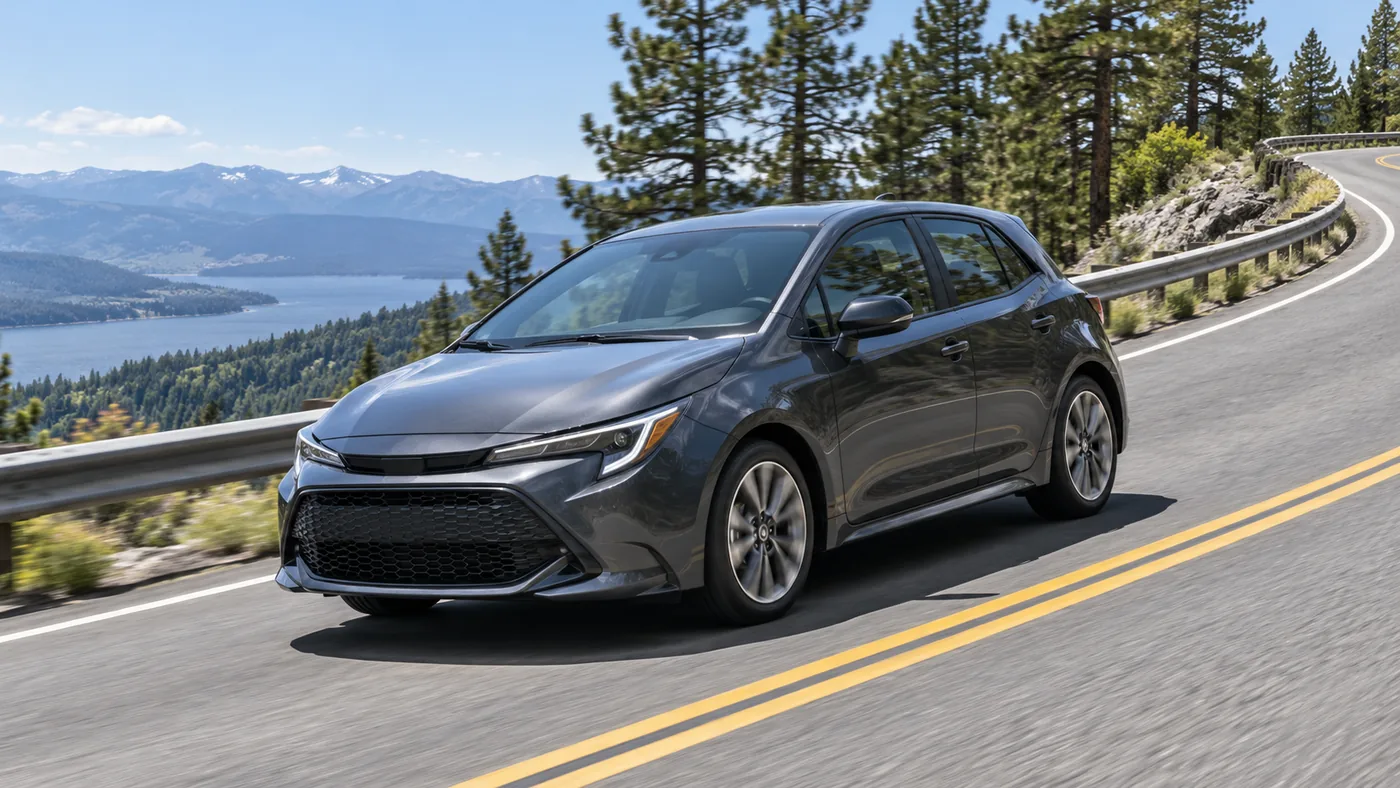
The grade is where the Guide says the motor can assist the engine. The photograph does not show a battery level, a brake type, or a measured climb.
What you still pay for on the grade
These are separate losses. None of them is a price.
- A city story on a freeway. Planning fuel stops as if FTP-75 braking will be there all day overstates the hybrid’s edge. The highway sentence is the one that matches a cruise.
- A hard descent. Energy that could have been stored is heat in the friction brakes when the stop is abrupt. The tip is to brake gently or moderately. It does not say a full battery will accept every downhill.
- The wrong hybrid. A mild system has a smaller effect. A plug-in is the car you can charge before the climb; a conventional hybrid is not. Charging stops for a plug-in belong on the EV road-trip page.
- Cabin loads. fueleconomy.gov says heating, air conditioning, and entertainment can lower fuel economy on any car, and can have a greater effect on hybrids. A cold descent with the heater on is that case. The page does not give a miles-per-gallon penalty for it.
Rules of thumb. If the road has little braking, do not count on the regenerative advantage fueleconomy.gov describes for stop-and-go traffic. If the brake application is hard, the friction brakes are doing the work and are not recovering energy. If the badge in the Guide is MHEV rather than HEV, expect the smaller effect the Guide names. If the day’s city share is under 55%, the combined label is weighting more city driving than the day contains. If the car cannot be plugged in, the climb is fueled by gasoline plus whatever regeneration the braking actually stored.
How long to stay at the wheel is a separate decision, on the daily distance page.
Methods and sources
The braking, idle, and highway sentences are fueleconomy.gov’s hybrid energy page, retrieved 20 October 2026. The braking tip, the note that designs differ, and the accessory warning are the fueleconomy.gov hybrid tips page, retrieved the same day. The 55/45 combined split, the 15,000-mile annual assumption, hill-climb assist, HEV versus MHEV, the “cannot be plugged in” sentence, and the stop-start “up to 5%” sentence are the 2026 Fuel Economy Guide from the Department of Energy and EPA. The 100-mile day and the 10/90 split are worksheet numbers. No car was assigned a tank result here.
Source documents read on 20 October 2026: